
Legal Casinos in New Zealand: Rules Explained
 Available in US
New Zealand’s framework distinguishes offshore operators from locally licensed casinos, and access does not necessarily indicate domestic authorisation.

Table of Contents
- How New Zealand’s Online Casino Rules Work
- Are Online Casinos Legal for Players in New Zealand?
- The Domestic Rules and Who Enforces Them
- What the Rules Mean for Crypto Casinos
- Bitcoin Casinos and the Limits of the Available Rules
- Can You Run an Online Casino from New Zealand?
- What Makes an Offshore Casino Available to NZ Players?
- How to Check an Online Casino’s Licence and Fairness
- What Changes for Online Casinos in 2026?
- Withdrawals, Verification and Banking for NZ Players
How New Zealand’s Online Casino Rules Work
The key distinction is where an online casino is based and which authority, if any, has authorised it. A website may accept customers in New Zealand while operating from overseas. That does not make it a New Zealand-based casino, or mean that a New Zealand regulator has issued it a licence.
For much of the existing framework, online casinos operating offshore have not been licensed or supervised by a dedicated New Zealand regulator. New Zealand has also lacked a domestic licensing system for online casinos. The result is a gap between access and local oversight: a site can be available to New Zealand residents without being authorised under a domestic online-casino licence.
That gap can make the word “legal” seem more straightforward than it is. A casino’s own overseas licence is not the same thing as approval from New Zealand. It describes the operator’s standing in the jurisdiction that issued it; it does not turn the operator into a New Zealand-licensed business. Equally, the absence of a local licence does not by itself mean that an offshore website is based in New Zealand.
When considering online casinos from New Zealand, it helps to check the specific licensing or payout information available for each option. Use these verdicts as a concise reference when deciding what you want to investigate further.
License: Curaçao Gaming Authority, licence no. OGL/2024/165/0185 You can note that BitStarz lists a Curaçao Gaming Authority licence, number OGL/2024/165/0185.
License: Tobique Gaming Commission, licence no. 0000064 Neospin lists a Tobique Gaming Commission licence, number 0000064.
Payout speed: 1-3 business days Lamabet’s stated payout speed is 1–3 business days, a useful detail for you to consider when reviewing payment expectations.
License: Tobique Gaming Commission, licence no. 0000002 Ricky Casino lists a Tobique Gaming Commission licence, number 0000002.
License: 07017519840 · Payout speed: 1-3 business days Zotabet lists licence identifier 07017519840 and a stated payout speed of 1–3 business days.
Payout speed: 1-3 business days Wintino’s stated payout speed is 1–3 business days, which gives you one concrete payment detail to consider.
License: Tobique Gaming Commission, licence no. 0000091 7Bit Casino lists a Tobique Gaming Commission licence, number 0000091.
License: Malta Gaming Authority, licence no. MGA/B2C/394/2017 N1 Casino lists a Malta Gaming Authority licence, number MGA/B2C/394/2017.
License: Malta Gaming Authority, licence no. MGA/B2C/370/2017 Play Grand lists a Malta Gaming Authority licence, number MGA/B2C/370/2017.
The distinction matters because the rules address different parts of the activity. New Zealand residents are not prohibited from accessing offshore platforms, while the domestic framework does not provide a local online-casino licence for those offshore businesses. The fact that a site takes New Zealand customers therefore tells you about its availability, not its local regulatory status.
Offshore access is not local approval
When you visit an offshore casino, you are dealing with a business operating from another jurisdiction. It may hold a licence there, but New Zealand has no specific regulator for online casinos based offshore. That means there is no New Zealand online-casino regulator supervising the site simply because it accepts customers here.
This is different from a domestic approval system in which a local authority issues licences and directly oversees the businesses holding them. In New Zealand, the existence of an overseas licence and the absence of a local licence are separate facts. Neither should be mistaken for the other.
It is also important not to treat the location of a website’s customers as proof of where the operator is established. A website can be accessible from New Zealand without being a casino based in New Zealand. The legal framework draws a boundary between offshore services and locally based online casinos; it does not erase that boundary when an overseas site accepts a Kiwi player.
What a licence does—and does not—tell you
An offshore licence can indicate that an operator is subject to the rules of the jurisdiction that granted it. It does not establish that New Zealand authorities have reviewed or endorsed the business. Nor does the presence of a licence logo on a website, on its own, settle whether the licence is genuine or current.

For readers, this means that “licensed” needs a jurisdiction attached to it. If a casino says it is licensed, the useful question is where that licence comes from and what authority is responsible for it. A statement about an overseas licence should not be read as a statement that the casino holds local New Zealand approval.
The distinction is not merely technical. If an offshore operator is not supervised by a New Zealand regulator, a customer cannot assume that the protections and complaint routes associated with domestic oversight apply. The operator’s overseas status may still matter, but it is not a substitute for New Zealand supervision.
A framework in transition
New Zealand’s online-casino rules are not best understood as a simple choice between “legal” and “illegal” websites. The central issue is whether a service is operating offshore or under domestic authority, and those are not interchangeable categories. A site may be accessible to residents without holding a New Zealand online-casino licence.
The country has introduced legislation to establish a domestic licensing regime, but the existence of a legal framework and the operation of a fully functioning licensing system are not the same thing. During a transition, the rules applying to businesses may change while the distinction between overseas access and domestic authorisation remains important. A casino’s claim about its status should therefore be read in context, rather than treated as a complete answer about its standing in New Zealand.
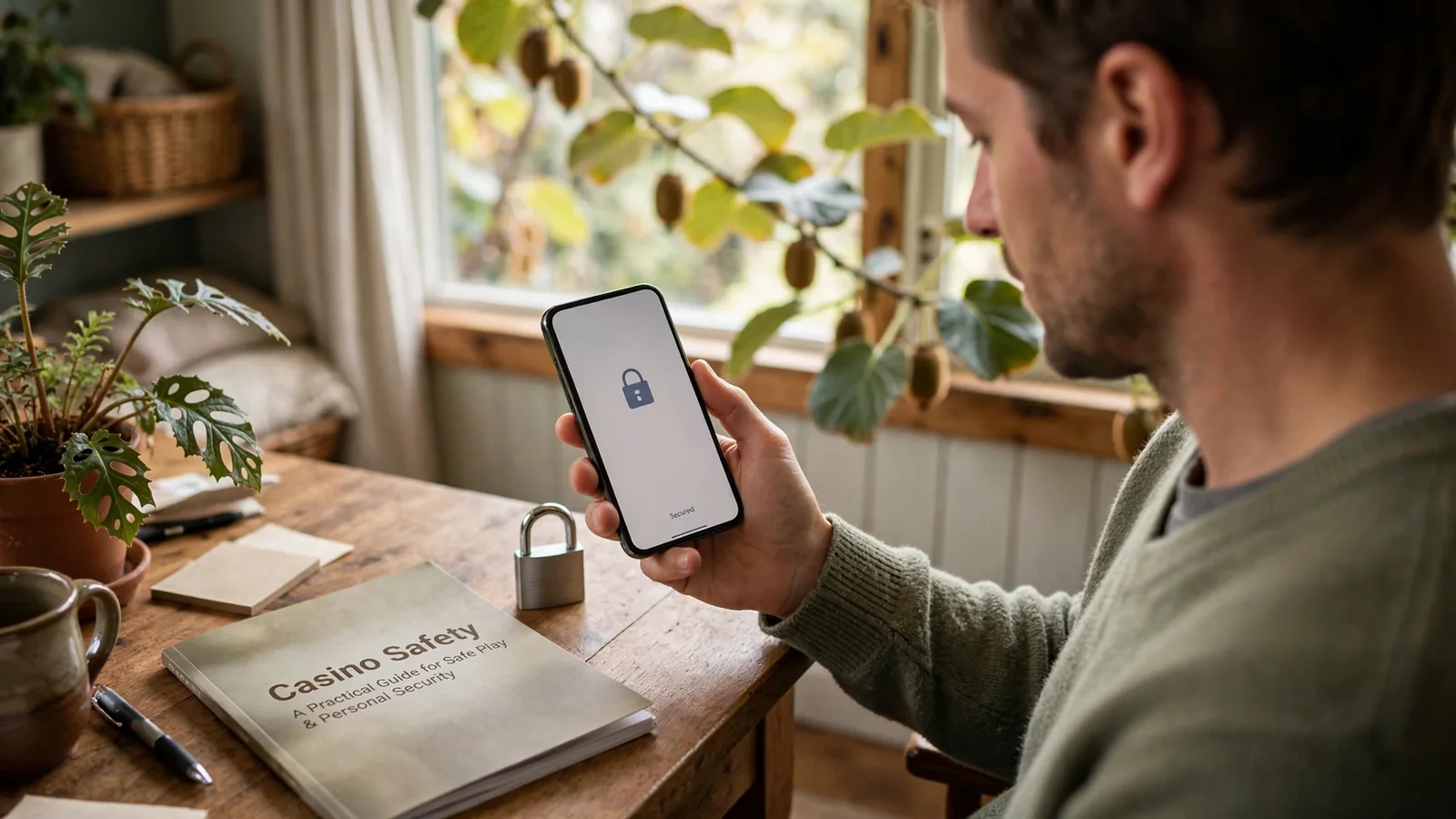
For now, the practical starting point is to identify whether the casino is an offshore service or a locally based operation. Then distinguish any overseas licence it may hold from approval under New Zealand’s own system. That keeps three different questions separate: where the operator is based, which jurisdiction licensed it, and whether New Zealand has authorised it domestically.
Are Online Casinos Legal for Players in New Zealand?
Yes. A person living in New Zealand may legally play at an online casino licensed overseas. The key distinction is between a player accessing a site from New Zealand and a company operating an online casino from within the country. The Gambling Act 2003 is directed at the latter; it does not make a New Zealand resident’s act of playing at an overseas casino an offence.
That distinction can be easy to miss. A website may be available to New Zealand users even though it is not a New Zealand-based casino. Its permission to operate comes from the jurisdiction that issued its licence, not from a domestic online casino licence. New Zealand residents are not prohibited from accessing overseas platforms simply because the operator is based abroad.
This does not mean every website that accepts a New Zealand registration has the same legal standing, or that access amounts to approval by the New Zealand government. A foreign licence is issued under another jurisdiction’s rules. It is not a local licence, and it does not turn the operator into a New Zealand business. The player’s legal position and the operator’s regulatory position are separate questions.


What legality means for a player
For an individual, the practical answer is that playing at an internationally licensed site is permitted. The law’s focus is not on prosecuting a person for placing a bet on an overseas platform. In other words, the fact that an online casino is offshore does not, by itself, make a New Zealand player’s use of it unlawful.
But “legal to play” is a narrow statement. It answers whether the player is prohibited from accessing such a site; it does not promise that the site is dependable, that every dispute will be resolved in the player’s favour, or that the New Zealand government supervises the operator. Those are different issues. A company’s overseas licence may provide oversight in the place where it is licensed, but that is not the same as New Zealand regulation.
This difference matters if you are deciding what a legal answer can tell you. It can settle the question of whether you, as a player, are breaking the law merely by using an overseas casino. It cannot, on its own, tell you how a particular operator handles accounts, payments or complaints. Nor should the words “licensed” or “legal” be treated as a guarantee of a particular outcome.
Attention: The fact that it is legal for you to play at an internationally licensed site does not guarantee that the site is dependable or that the New Zealand government supervises the operator.
Player access is not operator permission
The law treats operating a casino from within New Zealand differently from playing at a casino based overseas. The Gambling Act 2003 targets operators running online casinos from inside the country, rather than New Zealand residents who access overseas sites. So a restriction aimed at domestic casino operations should not be read as a blanket ban on residents using foreign platforms.
This separation also prevents a common misunderstanding: a player’s ability to visit a site does not establish that the company is entitled to run an online casino from New Zealand. The location and conduct of the operator matter to the operator-side rules; the player’s act of accessing an overseas service is a distinct matter. The legal answer for the customer is therefore not simply the reverse of the rules governing the business.
If you are reading claims that online casinos are either wholly legal or wholly illegal in New Zealand, look at what the claim is describing. It may be referring to companies operating from within the country, or to residents playing at platforms based overseas. Those are not interchangeable situations. For players, access to internationally licensed sites is not prohibited; the domestic restrictions concern operators.
A foreign licence still deserves careful attention, because it identifies the framework under which the casino says it operates. It does not change the basic player-side answer, and it should not be confused with a licence granted by a New Zealand online casino regulator. The legal permission for a resident to play and the quality of a particular site’s oversight are separate questions.


The same distinction applies when a site’s marketing uses broad claims about being “legal” or “regulated.” Ask what those words refer to: the player’s right to access it, the operator’s licence abroad, or permission to run a casino from New Zealand. A statement about one does not prove the others. For a New Zealand resident, the central point is straightforward: playing at an internationally licensed overseas casino is not prohibited by New Zealand law, while the Act’s restrictions are aimed at operators running online casinos within the country.
The Domestic Rules and Who Enforces Them
New Zealand’s domestic gambling rules are built around the Gambling Act 2003, with the Department of Internal Affairs (DIA) and the New Zealand Gambling Commission playing distinct roles in oversight. The Act sets the legal framework for gambling in the country, while the agencies deal with different parts of its administration and supervision. Understanding that division helps clarify what “legal” means when discussing casinos connected to New Zealand.
The Gambling Act 2003 remains central to the domestic framework. It governs gambling activity in New Zealand and does not permit online casinos to be based in the country. That restriction concerns where an operator is established and runs its service; it should not be confused with the separate question of an individual using an overseas website. The Act’s domestic focus is on the conduct and oversight of gambling activity within New Zealand.
The Gambling Act 2003 governs gambling activity within New Zealand and does not permit online casinos to be based in the country.
The law has since been supplemented by the Online Casino Gambling Act 2026, which establishes the country’s first domestic licensing regime for online casino gaming. The earlier position was that offshore online casino gambling was not licensed or supervised by a New Zealand regulator. The new legislation changes the regulatory framework, while transitional provisions address services that were already operating for people in New Zealand. This does not mean that every online casino a resident can reach is supervised by local authorities.
The Department of Internal Affairs
The DIA handles local gambling regulation, with attention to domestic operators and the prevention of gambling harm. Its remit is therefore broader than checking whether a website displays a licence badge. It concerns gambling activity within New Zealand and the measures intended to reduce harm associated with it.
For readers, the practical point is that local oversight is not a general endorsement of every gambling service available online. The DIA’s role relates to domestic regulation; it does not turn an offshore casino into a New Zealand-regulated business merely because that business accepts customers here. Nor should the existence of local gambling rules be taken as proof that a particular website has been assessed by the department.
Harm prevention is part of the DIA’s work because gambling regulation is not only about whether an operator may conduct a business. It also concerns the effects gambling can have on people and communities. That public-policy function is distinct from deciding whether an individual game is fair or whether a particular operator will honour a withdrawal.

The New Zealand Gambling Commission
The New Zealand Gambling Commission is also identified as an oversight body for gambling under the domestic framework. Its place in the system should be understood alongside the DIA’s local regulatory role, rather than as evidence that New Zealand issues a domestic licence to every online casino serving its residents.
The two names are not interchangeable. The DIA handles local gambling regulation and harm prevention; the Commission is the body associated with oversight under the Gambling Act. For a reader trying to assess a casino, the distinction matters because a reference to a New Zealand agency is meaningful only if the agency’s role and the operator’s legal status match the claim being made.
A website’s wording can blur those lines. “Regulated” may refer to a foreign authority, a domestic rule, or simply a statement made by the operator. A New Zealand agency name or national symbol on a page is not, by itself, evidence of local approval. Check what the claim actually says and whether it identifies a real regulator and a verifiable authorisation.
Domestic oversight also has limits. Before the 2026 legislation, offshore online casino services were not licensed or supervised by a New Zealand regulator, and customers wagering with such a service had no domestic government recourse. The creation of a licensing framework does not retrospectively give local agencies control over every past transaction or every overseas operator.
For New Zealand readers, the useful distinction is between domestic gambling regulation and oversight of a particular offshore site. The Gambling Act 2003 and the agencies administering the local framework govern gambling matters within their remit. They should not be read as a blanket assurance about any casino accessible from the country. When a site claims New Zealand approval, look for a precise explanation of which authority issued it and what that authorisation covers.
Domestic Oversight
- The DIA handles local gambling regulation and harm prevention.
- The New Zealand Gambling Commission is the body associated with oversight under the Gambling Act.
- Domestic oversight does not provide a blanket assurance for every casino accessible from the country.
What the Rules Mean for Crypto Casinos
Using cryptocurrency does not, by itself, determine whether an online casino is lawful for a New Zealand player. The relevant distinction is whether you are playing at an offshore site and what authorisation that operator holds. New Zealand residents may access offshore platforms; the fact that a casino accepts crypto does not create a separate route around the rules that apply to the operator.
Offshore casinos serving Kiwi players may hold licences from jurisdictions such as Curaçao, Malta or Gibraltar. A licence is issued to an operator under the rules of its licensing jurisdiction; it is not a New Zealand licence. Nor does accepting Bitcoin or another cryptocurrency make an unlicensed site licensed. If a casino advertises a licence, treat that claim as something to verify rather than proof supplied by the payment option or the site’s branding.
This matters because “crypto casino” describes how a site may accept or pay out funds, not who oversees it. A casino may offer cryptocurrency alongside other payment methods, but the currency used does not tell you whether the operator is properly authorised where it is based. Look at the operator and the licence it claims, not just the cashier page.
There is also a practical difference between being able to access a site and having the same protections you might expect from a locally supervised service. An offshore licence comes from another jurisdiction, and the casino’s obligations depend on that licensing arrangement. Crypto payments do not change that relationship or make a dispute easier to resolve. Before depositing, read the site’s terms for deposits, withdrawals and account restrictions, and check whether its stated licence is genuine and active.

The phrase “crypto casino” can therefore cover very different operators. Some may be licensed offshore; others may simply accept digital currency without offering a verifiable licensing basis. The payment method alone cannot establish which applies. If you cannot identify the operator or confirm the licence it claims, you have little basis for judging the site’s oversight. Treating a crypto option as a mark of legality would confuse a way to move funds with the authority to run a casino.
Bitcoin Casinos and the Limits of the Available Rules
Bitcoin does not, by itself, give an online casino a different legal status in New Zealand. The relevant question is who operates the site and what licence or authorisation applies to that operator—not simply whether deposits or bets use bitcoin. The available rules do not establish a separate bitcoin-casino licence category.
Some offshore casinos accept New Zealand players under licences issued in places such as Malta, Curaçao and Gibraltar. Licensing bodies recognised for offshore online casinos recommended to New Zealand players include the Malta Gaming Authority, the Kahnawake Gaming Commission and Curaçao eGaming. Those names identify the jurisdiction or body behind a licence; they do not mean that every site displaying one is properly licensed, or that a foreign licence is the same as approval under New Zealand’s domestic regime.
One of the recognized licensing bodies for offshore online casinos recommended to New Zealand players.
One of the recognized licensing bodies for offshore online casinos recommended to New Zealand players.
One of the recognized licensing bodies for offshore online casinos recommended to New Zealand players.
That distinction matters when a casino accepts cryptocurrency. A bitcoin payment option is a feature of the site, not evidence of its regulatory standing. Nor does a licence logo on a homepage prove that the licence is active or belongs to the company operating the casino. Treat the logo as a claim to verify, not as proof.
Before registering or depositing, look for the operator’s legal name and the licence details in the site’s terms or footer. Then use the licensing body’s own records to check that the licence is current and that the named company matches the casino. If the details cannot be confirmed, the payment method does not make the uncertainty any smaller.
A foreign licence also does not remove the practical risks of using a site operating outside New Zealand. In particular, do not assume that a dispute over a bitcoin deposit or withdrawal will be resolved by a New Zealand regulator. Confirm the applicable terms, including the rules for deposits and withdrawals, before sending funds; cryptocurrency transfers may be difficult to reverse, so errors in an address or payment instruction can matter.
The short answer to whether bitcoin casinos are legal is therefore not determined by the currency they use. Bitcoin alone neither validates a casino nor establishes that it is unlawful. Check the operator and its licence, and distinguish a verifiable foreign licence from New Zealand authorisation.

Can You Run an Online Casino from New Zealand?
The legal position is different for a person who plays at an overseas casino and a business that operates an online casino from within New Zealand. The Gambling Act 2003 targets the operator’s activity: it does not allow online casinos to be based in New Zealand. A player accessing an overseas site is not doing the same thing as establishing or running a casino locally.
That distinction matters because “available to New Zealand players” does not mean “operated from New Zealand”. An overseas business may provide access to people here, while its casino remains based offshore. The operator’s location and activity are central to the question of whether a business is running an online casino from within the country.
The Online Casino Gambling Act 2026 has since created New Zealand’s first domestic licensing regime for online casino gambling. It came into force on 1 May 2026, with a transitional period for online casinos that were already serving New Zealand customers before that date. The new regime does not change the basic distinction between an overseas player using a site and a business operating a casino from within New Zealand.
So, is it legal to run an online casino from New Zealand? The answer depends on what “run” means and which rules apply. A business should not assume that the ability to reach New Zealand customers gives it permission to establish or operate a casino here. The Gambling Act 2003 prohibits online casinos being based in New Zealand, while the later Act sets out a licensing framework for online casino services and transitional arrangements for existing providers.
Legal Risk
Running an online casino from within New Zealand is prohibited under the Gambling Act 2003, regardless of whether the site is accessible to players.
For a prospective operator, the relevant question is not simply whether New Zealand residents can reach the website. It is whether the business’s location and conduct bring it within the rules for operating an online casino in New Zealand. Those are operator obligations, not a restriction on players merely visiting an overseas site.
This is a material difference from ordinary consumer use. A person playing overseas is not thereby operating the casino, and the rules directed at casino operators should not be read as though they automatically apply to every customer. Businesses considering an online casino venture need to assess the applicable legislation and licensing requirements before offering services; treating offshore access as permission to establish a local operation would confuse two separate legal questions.
What Makes an Offshore Casino Available to NZ Players?
New Zealand residents can legally play at internationally licensed online casinos. The important distinction is that an overseas licence comes from another jurisdiction; it is not a licence issued by New Zealand. A site being open to visitors from New Zealand therefore does not, by itself, establish that its operator holds local approval.
Three licensing bodies are recognised in connection with offshore online casinos recommended to NZ players: the Malta Gaming Authority, the Kahnawake Gaming Commission and Curaçao eGaming. Their names can help you identify who is said to oversee a site, but they are not interchangeable labels or proof that any particular casino is licensed. The operator should identify the body responsible for its licence and provide a way to check that claim.

A foreign licence may be relevant to the casino’s oversight in the jurisdiction that issued it. It does not mean the New Zealand government supervises the operator, nor does it give you the same route to domestic recourse as dealing with a local regulator. That difference matters if a dispute arises: before the new domestic framework, offshore casino gambling was not licensed or supervised by a New Zealand regulator.
There is also a timing qualification. The Online Casino Gambling Act 2026 created a transition period beginning on 1 May 2026. During that period, online casinos that were already serving people in New Zealand before that date may continue until 1 December 2026, subject to the Act’s transitional provisions. A licence from Malta, Kahnawake or Curaçao should not be treated as a blanket permission for any offshore operator to enter the New Zealand market.
For you, availability and oversight are separate questions. A site may accept New Zealand customers, while the licence it displays is issued overseas and its New Zealand position depends on the applicable rules. Do not infer that a casino is approved merely because it loads, accepts registration or lists one of these licensing bodies. Nor should a licence logo alone settle the question. The useful starting point is to establish which regulator is named, whether the operator’s claim can be confirmed, and whether the casino is permitted to serve New Zealand customers at the time you use it.
This is not a ranking of casinos. The licensing body is one part of assessing an operator, not a substitute for checking its current status or understanding where responsibility for oversight lies.
- Establish which regulator is named on the site.
- Confirm if the operator’s claim can be verified.
- Check if the casino is permitted to serve NZ customers.
- Infer approval just because a site loads or accepts registration.
- Treat a licence logo alone as final proof of legality.
- Assume a site is approved simply because it lists a licensing body.
How to Check an Online Casino’s Licence and Fairness
A licence logo is a claim, not proof. If an online casino says it is licensed, follow the logo to the regulator’s own website and check that the operator’s name and licence status match. If the link does not work, or the details point to a different company, do not treat the badge as confirmation. Check the casino’s terms as well: the legal company named there should be consistent with the licence record.
A licence check and a fairness check answer different questions. The first concerns who is responsible for the site and whether its authorisation is active. The second concerns how games are tested. Neither should be treated as a substitute for the other, and a testing certificate does not establish that a site holds a valid licence.
For game testing, look for information about the random number generator (RNG), the software that determines game outcomes, and published payout percentages. eCOGRA and iTech Labs certify RNG software and payout percentages. Check the testing organisation’s own records or certificate details where available, rather than relying only on a logo displayed by the casino. Independent testing can support claims that outcomes are random and games are fair; it does not guarantee a particular result or that you will win.
Also check whether the site uses encryption to protect personal and financial information. A secure connection helps safeguard data sent to the site, but it does not prove that the operator is licensed or that its games have been independently tested.
Licensed casinos are expected to protect player data, check age and identity, and provide responsible gambling tools. Look for clear information about those protections before creating an account. Tools may include ways to set limits, take a break or exclude yourself from gambling. If the terms or responsible gambling information are hard to find, that is a reason to pause rather than assume the protections are in place.

Before depositing, review the operator’s current terms and withdrawal conditions, including any conditions attached to bonuses. Keep the checks separate: verify the licence with the issuing regulator, look for independent evidence of game testing, and inspect the site’s security and player safeguards. A polished site can display reassuring symbols; what matters is whether those claims can be checked independently.
What Changes for Online Casinos in 2026?
New Zealand’s online casino rules are moving from a transitional period towards a domestic licensing system. The Online Casino Gambling Act 2026 took effect on 1 May 2026, creating the country’s first framework for licensing online casino providers. Its transitional arrangements run until 1 December 2026, so the change is not a single switch from an unregulated market to a fully operational licensing regime.
Casinos that were already serving New Zealand customers before the Act took effect may continue during the transition, subject to the Act’s conditions. The full licensed system is not expected to be operational until 2027. That distinction matters: the legislation is in force, but the complete system for licensing providers is still being put in place.
2026 Transition Timeline
The Online Casino Gambling Act 2026 took effect on 1 May 2026. Transitional arrangements for eligible providers run until 1 December 2026, with the full licensed system expected to be operational in 2027.
A specialist casino review reports that a new operator framework is due to begin on 1 December 2026 and that only 15 approved platforms will then be allowed to operate legally. It also says offshore operators without approval will no longer be permitted to accept New Zealand players after that date. Treat these as reported details of the planned transition, rather than evidence that the full licensing regime will be operational on that day; the wider system is expected to be fully running later.
For you, the practical point is that a site’s current accessibility does not by itself establish what its position will be after the transition. Existing providers have transitional permission, but that does not mean every offshore casino will qualify for a future New Zealand licence. Nor does the planned limit mean that a particular platform has already been approved.
The Act also marks a change from the earlier position, when online casino gambling provided from outside New Zealand was not licensed or supervised by a domestic regulator. During the transition, the new rules and the continued operation of eligible providers sit alongside one another. The timetable therefore has two stages: the transition’s end on 1 December 2026, followed by the expected full operation of the licensed regime in 2027.
When checking a casino’s status, distinguish between a foreign licence and approval to operate under New Zealand’s new system. They are not interchangeable. The transition is a legal change for providers, not a guarantee that every site currently available to New Zealand residents will remain available afterward.
Withdrawals, Verification and Banking for NZ Players
A withdrawal can depend on checks and conditions that are easy to overlook when depositing. Before you put money into an account, read the operator’s payment terms: they should explain how to request a payout, which methods are available, and whether the deposit method must be used again.

For anti-money-laundering purposes, online casinos in New Zealand typically require withdrawals to go back through the same method used to deposit. That can affect your choice of payment method from the start. If you deposit using one route but expect to withdraw through another, check the terms first rather than assuming the operator will make an exception.
Identity checks are another practical part of getting paid. KYC, or “know your customer”, is the process an operator uses to confirm a player’s identity. A specialist casino review reports that missing verification documents can place a withdrawal on hold and advises completing KYC before requesting a payout. Treat that as practical guidance, not a guarantee about every operator’s process: check the account requirements directly and submit any requested information through the operator’s official channels.
A hold does not necessarily mean a payment has been refused. It may mean the operator has not completed its checks or that a condition in the withdrawal terms remains unmet. Keep a copy of the relevant terms and your payment records so you can compare the request with what the operator has stated. If a payout is delayed, ask which requirement is outstanding and request a clear explanation in writing.
Bank transfers are a commonly used withdrawal option for players in New Zealand. A specialist casino review reports that transfers can take three to seven days, but that timing is not a fixed promise for every bank, operator or transaction. Check whether the operator’s stated processing period covers its own review only or also the time taken by the bank to credit the funds.
Before registering or depositing, make sure the account name and payment details are accurate and that you understand any withdrawal conditions. Then complete identity verification before requesting a payout. These steps cannot guarantee a particular processing time, but they can help you avoid preventable delays caused by incomplete checks or a mismatch between the deposit and withdrawal methods.
Are online casinos legal in New Zealand?
Yes, you can legally play at internationally licensed offshore casinos. That does not mean they hold a New Zealand licence; the new licensed-operator framework is due to take effect on 1 December 2026.
How can players identify a safe online casino?
Check which authority issued the casino’s licence and verify that the licence is genuine and current. Look for independent game testing by eCOGRA or iTech Labs, encryption, identity checks and responsible gambling tools.
What payment methods are available for NZ online pokies?
Bank transfers are commonly used for withdrawals and can take three to seven days. Withdrawals typically need to use the same method as the deposit.
Who is responsible for enforcing gambling laws in New Zealand?
The Department of Internal Affairs handles local gambling regulation, including domestic operators and harm prevention. The New Zealand Gambling Commission also oversees gambling under the Gambling Act 2003; offshore online casinos do not have a dedicated New Zealand regulator.
Why is offshore gambling considered risky for consumers?
Offshore casinos are not supervised by a dedicated New Zealand online-casino regulator. You therefore cannot assume that local oversight, protections or complaint routes apply.
Are NZD-accepting offshore casinos legal in NZ?
Accepting New Zealand dollars does not give an offshore casino New Zealand approval. You can legally access internationally licensed offshore sites, but an overseas licence is not a New Zealand licence.
Prepared by the Casino Experts NZ editorial staff.