Blackjack Odds for New Zealanders: Rules and Strategy
 Available in US
Card values, dealer rules and player decisions affect the chance of winning, but no strategy can guarantee a result.

Table of Contents
- The Card Values and Decisions Behind Blackjack Odds
- How Basic Strategy Changes Your Chances
- What Perfect Play Can—and Cannot—Tell You About Winning
- Casino Blackjack Odds Depend on the Rules at the Table
- Why a Run of Hands Does Not Set the Odds for the Next One
- Online Blackjack: Faster RNG Games and Live-Dealer Play
- What a Blackjack Odds Calculator Can—and Cannot—Calculate
- Dealer Busts and the Player’s Hand
- Blackjack Payouts: Why 3:2 and 6:5 Are Not the Same
- Deck Count, Side Bets and Rule Variations
The Card Values and Decisions Behind Blackjack Odds
Blackjack is a contest against the dealer, not a race to reach 21 at any cost. Your aim is to finish closer to 21 than the dealer without going over. That makes the value of each card important: a hand’s total determines whether another card might help or push you past the target.
Number cards count at their face value. A face card counts as 10, while an ace can be worth either 1 or 11. The ace’s flexibility can make a hand’s total depend on what you draw next. For instance, a hand containing an ace may be counted in a way that avoids going over 21; if counting it as 11 would take the hand past the target, it can count as 1 instead. This is why two hands with the same number of cards may have quite different prospects.
A hand’s total is not the same thing as its odds of winning. Odds describe the likelihood of an outcome, such as drawing a particular card, making 21 or beating the dealer. Those likelihoods depend on which cards are in play and how the game is set up. So there is no single number that answers every question about the odds of getting a 10, reaching 21 or winning a hand.
Blackjack odds depend on the rules and decisions at the table, so check those before you play. Use this list as a reference point when considering where you might play in New Zealand in 2026.
License: Curaçao Gaming Authority, licence no. OGL/2024/165/0185 You can note BitStarz’s listed Curaçao Gaming Authority licence, no. OGL/2024/165/0185, when reviewing the operator.
License: Tobique Gaming Commission, licence no. 0000064 Neospin lists a Tobique Gaming Commission licence, no. 0000064, for your reference.
Payout speed: 1-3 business days The stated payout speed for Lamabet is 1–3 business days, a detail you can factor into your review.
License: Tobique Gaming Commission, licence no. 0000002 Ricky Casino lists a Tobique Gaming Commission licence, no. 0000002, for you to check.
License: 07017519840 · Payout speed: 1-3 business days Zotabet lists licence identifier 07017519840 and a payout speed of 1–3 business days; you can consider both details when reviewing it.
Payout speed: 1-3 business days Wintino’s stated payout speed is 1–3 business days, which you can note when considering the operator.
License: Tobique Gaming Commission, licence no. 0000091 You can note 7Bit Casino’s listed Tobique Gaming Commission licence, no. 0000091.
License: Malta Gaming Authority, licence no. MGA/B2C/394/2017 N1 Casino lists a Malta Gaming Authority licence, no. MGA/B2C/394/2017, for your reference.
License: Malta Gaming Authority, licence no. MGA/B2C/370/2017 Play Grand lists a Malta Gaming Authority licence, no. MGA/B2C/370/2017, which you can check as part of your review.
The same distinction matters when you ask about a starting total such as 11 against a dealer’s 5. Those card values describe the situation, but they do not by themselves settle the outcome. The cards still to come matter, as do the choices available to you. A hand total is a snapshot, not a promise.
After receiving cards, you can choose to hit, meaning take another card, or stand, meaning keep your current total. You may also be able to double down, which changes how you continue the hand, or split, which separates a pair into two hands. These choices give you different ways to respond to your cards, but none changes the basic aim: finish nearer to 21 than the dealer without exceeding it.
It helps to separate three questions. First, what is the chance of being dealt a particular card or total? Second, what is the chance of winning once you have a hand and the dealer has one? Third, what choice should you make with the cards you can see? They are related, but they are not interchangeable. Knowing that a total is possible does not establish how often it occurs, and knowing a hand’s total does not guarantee whether it will win.

For that reason, a claim about “the odds of blackjack” needs to say what outcome it means. It might refer to receiving a particular starting combination, ending on 21, or winning against the dealer. Each is a different event. The word “blackjack” can also be used loosely to mean the game itself, which makes a bare odds figure especially easy to misread.
For a new player, the useful starting point is the card arithmetic and the aim of the hand. Once you know what each card can count for, you can understand why a decision depends on your current total rather than on a general promise that a certain card or choice will produce a win.
How Basic Strategy Changes Your Chances
Basic strategy is a way to choose an action based on the cards in your hand, the dealer’s visible card and the table’s rules. It does not make every hand a winner. Its purpose is narrower: to help you avoid decisions that are less favourable in the situation you face.
The available choices are to hit, stand, double down or split. Hitting adds a card to your hand; standing ends your turn without taking another. Doubling down means increasing your wager in return for taking a further card and then standing. Splitting separates a pair into two hands, each played in turn. Which action makes sense depends on the state of the hand, so a rule of thumb applied without regard to the cards can point you the wrong way.
- Use a strategy chart matching your specific game rules
- Identify the deck count and dealer’s soft 17 rule
- Account for surrender availability in your decisions
- Apply a general rule of thumb without regarding the cards
- Use a chart built for a different version of blackjack
- Rely on a chart that omits options like surrender
A strategy chart sets out suggested actions for combinations of player cards and dealer cards. It can be a useful reference, but it is not a universal map. The number of decks, the dealer’s treatment of a soft 17, surrender availability and the payout for blackjack can all differ. A specialist review also describes these as rules that vary between games. Because those details affect the choices represented in a chart, make sure the chart is for the version you are actually playing.
The distinction matters most when an action changes what happens next. If you hit, you take another card and accept the chance that the hand becomes unusable. Standing avoids that risk but leaves the total where it is. Doubling commits you to a larger wager before you know the next card, while splitting turns one hand into two separate decisions. Basic strategy weighs these trade-offs against the dealer’s exposed card; it is not simply a command to take more cards whenever your total seems low.
That is why “play basic strategy” is incomplete advice unless the game is identified. A chart built for one set of rules may give a different recommendation from a chart built for another. If the table offers surrender, for instance, that option must be represented in the strategy being used; a chart that omits it cannot tell you when to choose it. The same applies when the dealer’s soft-17 rule or the number of decks differs.
A chart is also only as useful as your ability to apply it accurately. You need to identify the cards, know the table rules and refer to the correct row and column. Misreading a hand or consulting a chart for another variant can turn a disciplined approach into a wrong play with a tidy-looking explanation. If you play without a chart, learning the decisions for the specific game can reduce reliance on memory and instinct, though it cannot remove uncertainty from the hand.
The phrase “blackjack odds with basic strategy” should therefore be read as a question about how decisions influence a game, not as a promise of a particular result. The choices can affect the expected cost of play over time, but they do not control which card appears next. A sensible decision can still be followed by an unfavourable outcome; an unsound decision can sometimes work out. The result of one hand does not establish whether the decision was sound.
Nor does a strategy chart settle every question a player might have about blackjack odds. It addresses choices at the table, not every feature that shapes a game or every possible outcome. A “perfect strategy” label should not be treated as a guarantee: the recommendations still rely on the rules and cards being considered. The next step is to separate good decision-making from the result of any individual hand.
If you are playing with real money, set a budget and do not chase losses. Before play, read the site’s fine print and bonus conditions on a trustworthy site. Blackjack may count differently towards wagering requirements, and maximum-bet rules can apply while wagering; check the terms rather than assuming every hand counts in the same way.
What Perfect Play Can—and Cannot—Tell You About Winning
“Perfect play” sounds like a promise of a result. In blackjack, it is better understood as a standard for decisions: choosing the action that is strongest for the hand and the rules in front of you. It does not mean that you can know how a hand will end, or make every hand a winner.
Perfect play is a standard for making the strongest decision based on the rules and hand in front of you, not a guarantee that every hand will win.
That distinction matters when someone asks what the odds are if you play perfect blackjack. There is no single answer that applies to every game. Blackjack variants use different rules, and those differences can affect both the best strategy and the house edge—the casino’s mathematical advantage over play. A statement about perfect-play odds is meaningful only when it identifies the particular version of blackjack being considered.
Even then, the result is an estimate about that game, not a forecast for your next hand. A good decision can still be followed by an unfavourable outcome. Conversely, a poor decision may happen to work out. Judging the quality of a choice by whether that one hand wins confuses the decision with the result. The cards do not become obliged to reward a sound choice.
Perfect play also has a narrower meaning than “knowing the right move” in the abstract. The best action depends on the situation and on the game’s rules. A strategy that is correct for one version may not be correct for another. So a table, chart or calculator that claims to show the odds under perfect play needs to make clear which rules its answer assumes. Without that context, a precise-looking answer can be less useful than it appears.
This is why “how to play blackjack” and “what are the odds when you play perfectly?” are related but different questions. The first concerns decisions; the second concerns what those decisions imply for outcomes under a specified set of rules. Strong decisions can improve your position compared with weaker ones, but they do not remove uncertainty or turn blackjack into a guaranteed win.

The same caution applies to claims about the odds of a blackjack. A natural blackjack is a particular starting outcome, while perfect play describes decisions made as a hand develops. Knowing how to make strong later decisions does not itself tell you how likely that starting outcome is. Nor does a claim about the chance of a natural answer every question about the chance of winning a hand. Those are different measures, and they should not be treated as interchangeable.
Some searches ask about perfect-pair odds or blackjack switch house odds. These refer to specific bets or variants, rather than to a universal measure of perfect play. The name alone is not enough to establish the odds: the rules and the particular outcome being measured matter. Likewise, an answer about ordinary blackjack should not be presented as an answer about a variant simply because both games use familiar cards and a dealer.
The number of people at the table is another detail that can be mistaken for a measure of better odds. A claim that blackjack odds improve with more players needs to say what odds it means and which game it describes. The number of other players, by itself, does not define a perfect-play calculation. A result cannot be transferred from one setup to another without knowing what assumptions were used.
When comparing claims, look for the game variant, the rules assumed, and the outcome being measured. Ask whether the figure concerns a hand, a natural blackjack, a side bet, or the house edge. These distinctions are more useful than the label “perfect,” which can make a conditional calculation sound like a personal guarantee. Good play is about making the strongest available choices; it cannot promise what the cards will do.
Perfect Play
- Perfect play involves choosing the strongest action for the specific rules and hand
- It does not remove uncertainty or guarantee a win on any individual hand
- The best action can vary between different blackjack versions
- Judging a decision by a single outcome confuses the choice with the result
Casino Blackjack Odds Depend on the Rules at the Table
There is no single figure for casino blackjack odds that applies to every table. The game’s rules help determine the house edge—the casino’s mathematical advantage over time—and can change what a given hand is worth or what choices are available. A number quoted without the rules behind it may describe a different game from the one you are considering.
A specialist review notes that blackjack tables can differ in deck count, whether the dealer hits or stands on soft 17, whether surrender is allowed, and how a natural blackjack is paid. A soft 17 is a hand containing an ace counted as 11 and totalling 17. These details matter because they affect the conditions under which hands are played and settled. Blackjack variants do not all produce the same house edge, so a published estimate should be read alongside the table rules it assumes.
That is also why an odds chart is not a universal answer. It can be useful only when its assumptions match the game in front of you. A chart made for one set of rules may not apply at another table, even if both games are labelled blackjack. The same caution applies to pair odds: a pair’s chance of appearing depends on the cards and game being considered, while the consequences of receiving one also depend on the rules. A label or chart without its underlying conditions can leave out the part that changes the result.
For New Zealand readers, the setting matters too. The Gambling Act 2003 does not permit online casinos to be based in New Zealand. The Online Casino Gambling Act 2026 created the country’s first domestic licensing framework for online casino gambling and came into force on 1 May 2026. The framework is in transition: online casinos that were already serving New Zealand customers before that date may continue until 1 December 2026 under the transitional provisions. The full licensed regime is not expected to be operational until 2027.

The Department of Internal Affairs is New Zealand’s primary gambling regulator and oversees the online casino licensing framework. The Gambling Commission has a separate role: it hears and decides casino licensing applications, issues online casino licences, and approves changes to licence conditions. Those responsibilities describe the framework; they do not mean that every online casino available to New Zealanders already holds a New Zealand licence during the transition.
Before the new law, offshore online casino gambling was not licensed or supervised by a New Zealand regulator, and customers had no domestic government recourse. The shift to a licensing system therefore changes the regulatory context, but it does not change the way blackjack rules determine the game’s odds. Keep those questions distinct: the licence framework concerns oversight, while the rules at the table determine which version of blackjack is being played.
If you are comparing a casino game, look for its stated rules rather than relying on a bare odds figure. Check which assumptions underpin any chart or estimate, and do not treat the phrase “blackjack” as proof that two tables offer identical conditions. In this game, the small print is part of the mathematics.
Regulatory Context
Online casinos serving New Zealand may only continue under transitional provisions until 1 December 2026; ensure you check the licensing status and terms of any site you use.
Why a Run of Hands Does Not Set the Odds for the Next One
A winning hand is one outcome, not a forecast. Blackjack is played against the dealer, and your aim is to finish closer to 21 without going over. Whether that happens in a particular hand tells you what happened in that hand; it does not, by itself, reveal what the next result will be.
That distinction matters when you look at a run of wins or losses. After several wins, it can feel as though a loss is due. After several losses, a win may seem overdue. Neither impression follows from the streak alone. A sequence of results is not a mechanism that makes the next hand compensate for the past.
The odds of winning a blackjack hand are also different from the odds of winning a long sequence of hands. To estimate the chance of a streak, you would need an estimate of the chance of winning each hand and a sound basis for how the hands relate to one another. A simple model might multiply the same per-hand probability repeatedly, but that is a model, not a universal description of blackjack. Without the conditions that support it, the calculation can give a misleadingly precise answer.
This is why a fixed figure for winning a particular number of consecutive hands cannot be inferred from the length of the streak someone has in mind. The same applies to asking about a short run of hands or a hand involving a particular number of hits or cards: those details alone do not establish the probability of winning. A result depends on the cards and on the comparison with the dealer, not merely on how many hands have already been won.

Nor does the number of hands played tell you the odds of hitting blackjack in the next one. “Hitting blackjack” describes a particular outcome, while winning a hand can happen in other ways. Treating those as interchangeable makes any estimate unclear before it is even calculated.
There is another practical complication: a sequence may take place in a game where cards are dealt from a continuing supply, or in a format where the dealing process differs. The past can describe what has already happened, but a streak by itself does not tell you what cards remain or how the next hand will unfold. So it is too broad to claim that every hand is wholly unaffected by earlier cards; it is equally wrong to treat a short run as a reliable signal of what comes next.
Keep records of a streak if they help you understand your own play, but do not use one as a betting forecast. A run of wins does not mean the next hand must be a loss, and a run of losses does not make a win due. Each result adds to the record of the session. It does not promise a particular result for the hand that follows.
Online Blackjack: Faster RNG Games and Live-Dealer Play
Online blackjack can use either software to shuffle and deal the cards or a live dealer handling actual cards. The distinction changes how the game is delivered and how quickly hands can proceed. It does not, by itself, tell you which version offers better odds.
Software-generated cards and shuffling. Offers faster play and convenience, but lacks the visual experience of a physical dealer.
Actual cards streamed on camera. Provides an experience closer to a physical casino, though may have streaming delays and higher bets.
In an RNG game, the cards are generated and shuffled by software. That format allows faster play than a live-dealer game, where the hand has to be dealt and played on camera. If you want to move through hands quickly, the software format may feel more convenient. The trade-off is that it does not reproduce the sight of a person dealing physical cards at a table.
Live-dealer blackjack uses actual cards, with the action streamed to your screen. The experience is closer to sitting at a casino table, but the stream can delay play. Live games may also require higher bets, so check the table’s stated conditions before joining rather than assuming the format will suit your budget.
Does one format offer the best odds?
A label such as “RNG” or “live dealer” is not enough to establish which game has the best odds. The odds depend on the particular game, not simply on whether cards are dealt by software or by a person. Blackjack versions can differ in rules, and those differences can affect strategy and the house edge. To compare two games, look at their actual rules and conditions rather than treating the delivery method as an odds rating.
That distinction matters if you are looking for blackjack with the best odds online. A fast software game may let you play more hands in less time, while a live game may take longer because it is streamed. Neither speed nor a physical dealer is proof of a more favourable game. Faster play can also mean making decisions more often, so set a budget in advance and do not chase losses.
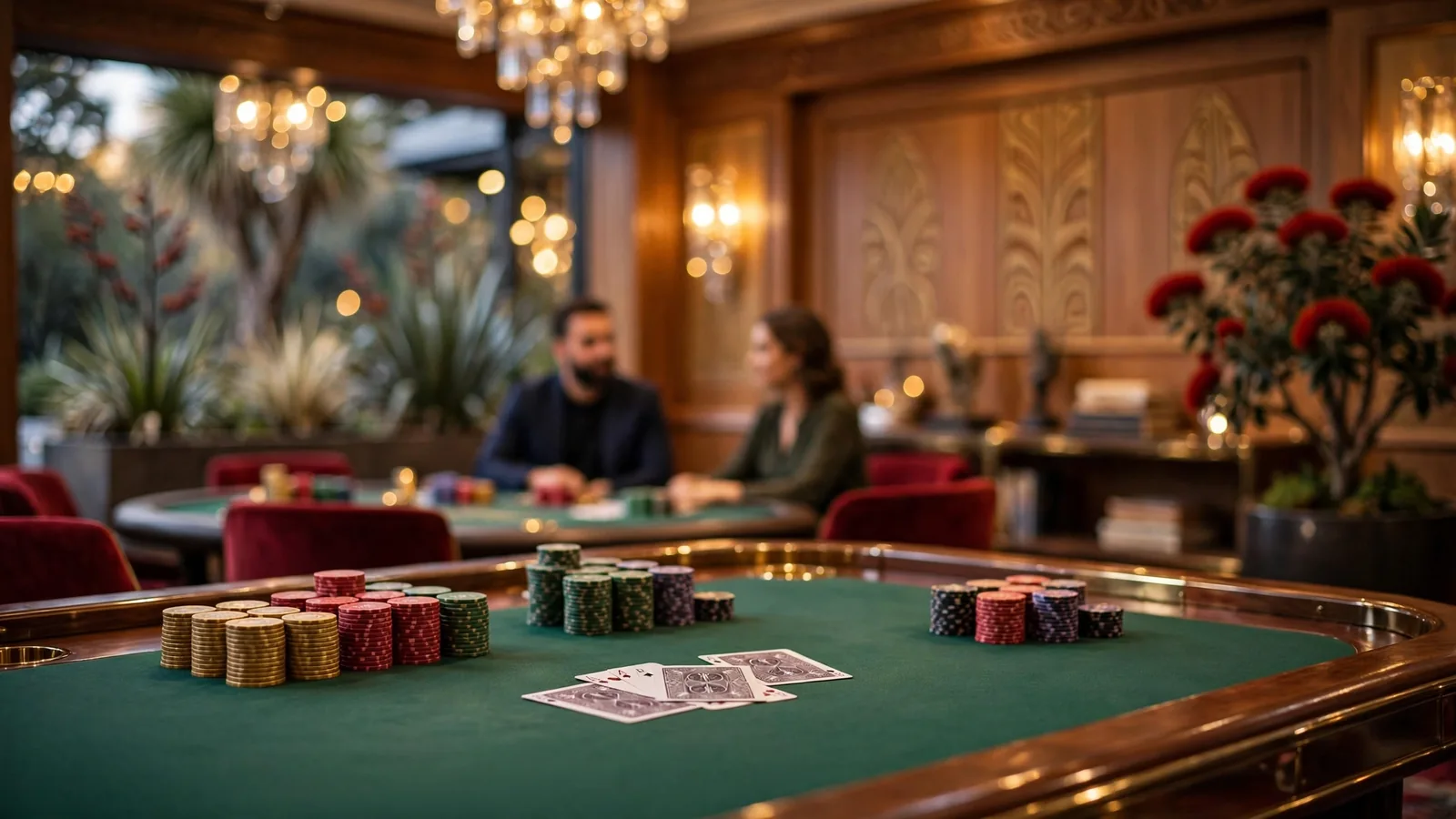
The same care applies to named styles such as European blackjack. The name alone does not tell you the full rules or establish the odds. Read the game information for the specific table; do not assume that two games with similar labels work identically.
A Martingale system, which changes bet size after results, is not a way to change how the cards are shuffled. It should not be treated as a guarantee of winning or of better odds. The relevant comparison remains between the games’ stated conditions, not a betting pattern layered on top.
If you prefer the feel of cards being dealt at a table, live dealer may be the closer match, provided you accept possible streaming delays and any higher betting requirement. If pace matters more, RNG blackjack is faster. Those are practical differences, not a verdict on which one will produce a better result for you. A sound comparison starts with the rules and the game information, then considers whether the format and pace suit how you intend to play.
What a Blackjack Odds Calculator Can—and Cannot—Calculate
A blackjack odds calculator can only give a useful estimate when its inputs describe the game and the cards in question. A result without that context may look precise while answering a different question from the one you have.
Start with the cards. Number cards count at face value, face cards count as ten, and an ace can count as one or eleven. If you are checking a hand containing four aces, the calculator needs to treat each ace as flexible rather than assign all of them the same value automatically. The cards already dealt matter too: the estimate can change depending on which cards remain available.
Using an Odds Calculator
- Input the exact card values, including flexible aces
- Specify the number of decks in play
- Set the dealer’s rule for soft 17
- Indicate whether surrender is allowed
- Confirm the blackjack payout ratio
Then check the table settings. A calculator may ask how many decks are in play, whether the dealer hits or stands on soft 17, and whether surrender is allowed. These details describe the rules that shape the estimate; selecting a setting that does not match the table makes the output less relevant. Blackjack payouts may also differ between games, so confirm what the tool includes before interpreting its result.
A calculator can model possibilities under the assumptions entered. It cannot establish what will happen in a particular hand, and it cannot correct inaccurate or incomplete inputs. Nor should a displayed figure be treated as a universal measure of blackjack odds: a different deck count, rule setting or set of known cards can produce a different calculation.
Use the result as a conditional estimate, not a promise. Read the tool’s explanation of what it is calculating—such as a hand outcome or a comparison between possible outcomes—and check whether it accounts for the rules you are playing under. If those details are unclear, the number may be less informative than it appears.
Dealer Busts and the Player’s Hand
A dealer bust means the dealer’s hand goes over 21. That matters because blackjack is a contest against the dealer: your aim is to finish closer to 21 without exceeding it. But a dealer bust does not erase what happened to your own hand.
If your hand has already gone over 21, the dealer’s later result does not turn it into a winning hand. If you remain at 21 or below when the dealer busts, you have avoided that outcome yourself and the dealer has gone over. The dealer’s bust is therefore important, but it is not a substitute for keeping your own total within the limit.
The reverse is also worth keeping clear. A dealer who does not bust has not automatically beaten you; the comparison still depends on the hands. The relevant question is how the two totals relate, with exceeding 21 changing the result. Looking only at the dealer’s chance of busting misses the player’s own exposure to the same risk.
There is no single figure for the odds of a dealer bust that applies to every blackjack hand. The chance depends on the cards in play and the game being dealt. A figure detached from that context cannot tell you what will happen in your hand, and it cannot by itself describe your chance of winning. Dealer odds and player odds are connected, but they are not interchangeable.
Your choices can affect whether your hand goes over: depending on the table, you may hit, stand, double down, split, or surrender. Those options shape the hand you take into the comparison with the dealer. They do not make a bust certain or prevent one from happening.
So, when considering a dealer bust, keep the two hands separate. First, your hand must stay within 21. Then the dealer’s outcome determines how the comparison resolves. A bust by either side matters; a bust by the dealer is not a promise of a win for a player whose own hand has already gone over.
Attention A dealer bust does not result in a win if your own hand has already exceeded 21.
Blackjack Payouts: Why 3:2 and 6:5 Are Not the Same
A natural blackjack can attract a different payout from an ordinary winning hand. The distinction matters because the payout describes what the casino pays for that specific result, not the chance that you will be dealt one.
An affiliate review reports that some tables pay 3:2 for a natural blackjack, while others pay 6:5. Treat those figures as a comparison to check against the rules of the table you are considering, rather than as a promise about every game. The ratio tells you the profit relative to your stake: 3:2 returns more profit than 6:5 for the same stake.
That difference applies when the hand qualifies as a natural blackjack under the table’s rules. It does not mean every winning hand receives that payout. A hand that reaches a strong total through additional cards is a different result, and its payment is governed by the game’s other rules.
When comparing blackjack payout odds, read the paytable rather than relying on a general description of the game. Confirm the amount shown for a natural blackjack and whether the table labels that result as a natural. If the payout is not clear, the displayed rules are more useful than assuming that one ratio applies across all tables.
The payout alone does not tell you the full odds at blackjack. It describes the reward for one particular outcome; it does not establish how often that outcome occurs or the overall return from playing. Those depend on the game being dealt and its rules. A more generous natural-blackjack payout is therefore a specific feature to compare, not proof that a table is better in every respect.
For a practical comparison, keep the question narrow: what does this table pay when you receive a natural blackjack? A 3:2 figure and a 6:5 figure are not interchangeable, even if the rest of the table looks similar. Check the stated payout before you play, and avoid treating an unattributed claim about what tables pay as a rule that applies everywhere.
Deck Count, Side Bets and Rule Variations
A single-deck game is not automatically better for you than a game using more decks. Deck count is one part of the rules, not a verdict on the odds. A specialist review notes that games can also differ in whether the dealer hits or stands on soft 17, whether surrender is allowed, and what a natural blackjack pays. These details matter because a change in rules can affect both the decisions available to you and the house edge.
That makes comparisons based on a label alone unreliable. To judge two tables, compare their full rule sets rather than assuming that fewer decks, or a particular game name, guarantees more favourable odds. The same caution applies when comparing free-bet blackjack with another version: the label does not tell you every condition governing the game. Check the table rules before treating the two as equivalent.
Side bets need separate scrutiny. Their odds cannot be inferred from the main game’s deck count or from the fact that they appear at a blackjack table. The terms of the side bet define what outcome qualifies and how it pays. Read those terms independently, and do not assume that a side bet improves your chances in the main hand.
If you are asking whether single-deck blackjack has better odds, the useful answer is: not on deck count alone. A different deck count may come with other rule changes, so you need the complete set of conditions to make a meaningful comparison. Likewise, a side bet or a free-bet feature should not be judged by its name. The rules attached to it are what determine how it relates to the main game.
When comparing games, note the deck count, dealer rule on soft 17, surrender availability and natural-blackjack payout. Then check any special-bet terms separately. Without that information, a claim that one format offers better odds is too broad to be useful.
Created by the ”Casino Experts NZ” editorial team.