
Online Slots in New Zealand: How Spins Work
 Available in US
See how slot outcomes, game formats, demo play and bonus conditions work, and why no spin can predict the one that follows.

Table of Contents
- How Online Slots Run—and What a Spin Can Tell You
- The 2026 Licensing Shift in New Zealand
- Classic Reels, Video Pokies and Changing Ways to Win
- Playing in a Browser or with Downloaded Software
- Demo Play and Trying a Slot’s Mechanics
- New Slot Formats: What Changes from Game to Game
- Bonus Terms: Wagering, Time Limits and Bet Caps
- Playing for Cash: Jackpots and the Limits of a Win
- Assessing Slot Sites Without a Rankings List
- Playing for Fun: Set Limits Before You Start
How Online Slots Run—and What a Spin Can Tell You
A spin on an online pokies game is not decided by the symbols shown on screen. Software generates the outcome, and the animation presents it to you. Understanding that distinction helps separate what a game’s figures can describe from what they cannot predict.
Virtual slot outcomes are produced by pseudorandom number generator software. “Pseudorandom” means that the software uses an algorithm to produce sequences that appear random; it does not mean a person or the game is choosing a result in response to what happened on the previous spin. The screen’s reels and symbols show the outcome, but watching them turn cannot reveal what the next one will be.
Each spin is independent. A run of losses does not make a win more likely on the next turn, and a recent win does not make another one less likely. The idea that a game is “due” after a quiet stretch treats earlier results as if they were building towards a correction. They are not. A spin has no memory of the one before it.
That matters when playing any online slot game for money. A sequence can look patterned, especially when symbols nearly line up or a feature seems close to triggering. But those near-misses do not tell you that the game is changing course. The display can make an outcome feel consequential; it cannot make the next result predictable.
What RTP describes
RTP stands for return to player. It is the percentage of a game’s total wagered value that the game pays back across its entire lifetime. It is a long-run measure of the game, not a promise about what you will get back during one session.

For instance, an RTP figure should not be read as a personal rebate or a target that the game must reach by the end of your play. A particular player’s results can differ sharply from the overall figure. The measure describes the game across a vast number of spins, not the path of an individual player’s balance.
RTP can help you understand one aspect of a game, but it does not tell you when a win will arrive, how large any particular win will be, or whether you will finish ahead. It is also not a forecast for your next spin. Even when two games have different RTP figures, neither figure turns an unpredictable sequence into a schedule.
This is why a game’s headline percentage and your short-term experience may seem at odds. A player might see several low returns in a row, or a larger result, without either outcome disproving the game’s long-run measure. The lifetime scale behind RTP is much broader than one person’s play.
Volatility and the shape of results
Volatility describes the pattern of a game’s payouts: how often wins tend to occur and how large they may be. Low-volatility pokies pay more regularly, but in smaller amounts. High-volatility games can have longer quiet stretches, with larger payouts when wins do occur.
Neither style is automatically better. More frequent small returns may make a game feel steadier, but they do not guarantee that your balance will hold. Longer gaps between wins can make a high-volatility game feel uneventful, while a larger payout is possible but never assured. Volatility is a description of the game’s payout pattern, not a forecast for your session.
Wins tend to occur more regularly, but the payouts are typically smaller in amount.
Payouts can be larger, but they are separated by longer quiet stretches between wins.
RTP and volatility answer different questions. RTP describes the share of wagers a game pays back over its lifetime; volatility describes how payouts are distributed along the way. Two games could have similar RTP figures yet feel very different in play if one returns smaller amounts more regularly and another has longer dry spells.
Neither measure tells you what a specific spin will do. That limit is easy to overlook when a game presents detailed figures, bright animations or a sequence that seems to be gathering momentum. Those features may make the experience more engaging, but they do not change the independence of the outcomes.
If you are comparing real online gambling slots, treat RTP and volatility as descriptions, not tools for predicting a win. They can help you understand the broad behaviour a game is designed to have. They cannot tell you that a win is coming, that a quiet patch is nearly over, or that playing longer will bring the results closer to a desired figure.
The 2026 Licensing Shift in New Zealand
If you’re choosing online slots in New Zealand in 2026, a clear reference point can help you review the details that matter to you. Use the notes below to see the specific licensing or payout information provided for each operator.
License: Curaçao Gaming Authority, licence no. OGL/2024/165/0185 BitStarz lists a Curaçao Gaming Authority licence, number OGL/2024/165/0185. You can use that licence detail as a reference when reviewing the operator.
License: Tobique Gaming Commission, licence no. 0000064 Neospin lists a Tobique Gaming Commission licence, number 0000064. You can refer to this information when assessing the operator.
Payout speed: 1-3 business days Lamabet lists a payout speed of 1–3 business days. You can keep that timeframe in mind when considering withdrawals.
License: Tobique Gaming Commission, licence no. 0000002 Ricky Casino lists a Tobique Gaming Commission licence, number 0000002. You can refer to this licence detail when reviewing the operator.
License: 07017519840 · Payout speed: 1-3 business days Zotabet lists licence number 07017519840 and a payout speed of 1–3 business days. You can review both details when considering the operator.
Payout speed: 1-3 business days Wintino lists a payout speed of 1–3 business days. You can use this stated timeframe as a reference when considering withdrawals.
License: Tobique Gaming Commission, licence no. 0000091 7Bit Casino lists a Tobique Gaming Commission licence, number 0000091. You can refer to this information when assessing the operator.
License: Malta Gaming Authority, licence no. MGA/B2C/394/2017 N1 Casino lists a Malta Gaming Authority licence, number MGA/B2C/394/2017. You can use the licence details as a reference when reviewing the operator.
License: Malta Gaming Authority, licence no. MGA/B2C/370/2017 Play Grand lists a Malta Gaming Authority licence, number MGA/B2C/370/2017. You can refer to this licence information when considering the operator.
For years, the key distinction in New Zealand was between an online casino operating from inside the country and an offshore site accepting New Zealand customers. The Gambling Act 2003 prohibited online casinos from being based in New Zealand. Its restrictions targeted the operators, not the people placing bets. That did not mean offshore gambling was overseen by a New Zealand regulator: before the new legislation, offshore services were not licensed or supervised domestically, and customers had no local government recourse if a dispute arose.
The Online Casino Gambling Act 2026 changes the framework. It created New Zealand’s first domestic licensing regime for online casino gambling and came into force on 1 May 2026. This is a change in how operators can be authorised to serve the market, not a declaration that every site available to New Zealanders is now locally licensed. The legal status of an operator still depends on whether it meets the new regime’s requirements.
The transition is important. Casinos already providing services to people in New Zealand before the Act took effect may continue operating under transitional provisions until 1 December 2026. That temporary permission is not the same as holding a licence under the full system. The licensed regime is not expected to be fully operational until 2027, so the 2026 change marks the start of the legal framework and transition, rather than the point at which the complete licensing system is in place.
The Department of Internal Affairs (DIA) is responsible for regulating the online casino licensing framework. In practical terms, that makes the DIA the relevant public authority for the system’s operation, rather than an overseas licensing body. A site’s claim about an offshore licence should not be confused with authorisation under New Zealand’s domestic regime.

Specialist industry coverage has described the initial licensing framework as allowing up to 15 operators. That figure concerns the reported design of the system; it should not be read as a count of licences already issued or as proof that a particular casino is approved. During a transition, the distinction between a provider allowed to continue temporarily and one licensed under the completed regime matters.
For someone considering online slots in New Zealand in 2026, the useful question is therefore not simply whether a casino can be opened from a local device. It is where the operator is based, what status it has under the transition, and whether the domestic licensing system has reached the stage being claimed. The Act’s restriction on domestic operation and the later licensing framework are connected, but they are not interchangeable: the new system creates a route for authorised operation, while the transitional provisions set out what happens before that system is fully running.
The law also does not turn a player into an operator. The Gambling Act 2003 was directed at those running online casinos from within New Zealand, rather than customers using them. That distinction is worth keeping clear, but it does not remove the practical risk of using an offshore service that, before the new regime, had no New Zealand regulator supervising it and offered no domestic government route for resolving a customer complaint. A change in legislation does not make every service equally accountable overnight.
Legal Risk
Using offshore services may leave you without a New Zealand regulator to supervise the operator or provide a domestic government route for resolving complaints.
Classic Reels, Video Pokies and Changing Ways to Win
The layout is one of the clearest ways to tell online pokies apart. Classic games use three reels, video pokies typically use five, and Megaways games can change the number of symbols shown on each reel from spin to spin. Those differences shape what you see on screen and how a game presents its possible wins.
Classic reels borrow the compact format of traditional fruit machines: three columns of symbols, with a straightforward visual arrangement. They typically pay smaller wins more often than high-volatility titles. That can make them feel less dramatic than games built around larger, less frequent payouts, though the distinction describes a broad style rather than a promise about what any particular session will bring.
Video pokies usually take up more of the screen. Their five reels can be accompanied by features such as wilds, scatters and free spins. A wild symbol can substitute for other symbols in a winning combination, while scatters commonly activate a feature; free spins let you play a set of spins without making a separate stake for each one. The exact rules vary from game to game, so the symbols’ descriptions matter more than their familiar names. A wild or scatter does not necessarily behave identically across every title.
These added features give video pokies more moving parts than a classic three-reel layout. A game may have a bonus round or free spins, but those features are not guaranteed to appear on a particular spin. If you prefer to know what a game includes before playing, check its paytable or information screen: that is where the symbol rules and feature conditions are explained.
Megaways is a different kind of reel format. The number of symbols visible on each reel changes between spins, so the layout is not fixed in the same way as a standard three- or five-reel game. Some Megaways titles can offer as many as 117,649 ways to win on a single spin. That figure describes the possible winning ways available in those titles, not a count of prizes or a prediction of what a player will receive.
The formats are therefore easiest to compare by looking at their structure. Classic pokies keep the display to three reels and typically suit a simpler presentation. Video pokies generally use five reels and may add wilds, scatters and free spins. Megaways changes the number of symbols on its reels from one spin to another, which can make the visible arrangement vary more.
If you are browsing online games, the number of reels alone will not tell you everything about a title. Read the game information to see which features are present and how they work. That is more useful than assuming that every video game has the same bonus rules, or that a large number of possible ways to win means a larger result. The format describes the structure; the individual game sets out its own details.
Three columns of symbols with a straightforward visual arrangement, typically paying smaller wins more often.
Usually five reels with additional features like wilds, scatters, and free spins.
A dynamic layout where the number of symbols on each reel changes between spins, offering up to 117,649 ways to win.
Playing in a Browser or with Downloaded Software
The difference between browser-based play and a downloadable casino client is about how the games reach your device. With a web-based casino, you play through a website without installing casino software on your computer. With a download-based service, you first install a software client; that client is required to play and place wagers. Neither option changes what a particular game is, but the setup and ongoing use are different.
Browser play avoids the step of downloading a separate casino program to your computer. You open the service in a web browser and use its website to access games. That can suit someone who would rather not add casino software to a device, or who does not want a casino client taking up local storage. “No download” describes this delivery method; it does not mean there is no website to visit or no account or other requirements to consider.
A browser-based service still depends on the website being available and usable in the browser and on the device you choose. Before relying on it, check the service’s own technical information and make sure the site works as intended on your equipment. The fact that a casino is accessible through a browser does not, by itself, tell you how well it will work on every device or browser. Nor does it establish anything about the casino’s standing in New Zealand.
A downloadable client has a more explicit installation step. You obtain the casino software and install it on your computer before you can use it to play and wager. That means checking the client’s requirements and whether it is compatible with your device before installing it. You are also choosing to place casino software on that computer, rather than using only a browser to reach the games. Those are practical differences, not evidence that one format is automatically safer, faster or more reliable.
The distinction matters most when you are deciding what you are willing to install and what equipment you plan to use. If you prefer not to add a separate program, browser-based play avoids that local software download. If you are considering a client, read the installation information first and understand what software you are being asked to put on your device. Do not treat a download button as a reason to proceed without checking who operates the service and what the installation involves.
For either format, keep the technical choice separate from the question of whether the service is permitted to operate for people in New Zealand. A site being accessible in a browser, or offering a downloadable client, does not establish its legal status. The delivery method is not a licence, and the presence of software on your computer is not proof that the operator has approval to serve customers here. The same caution applies to a site that describes itself as a real-money casino: that label does not settle the regulatory question.
It is also useful to distinguish “online” from “installed.” Both web-based casinos and download-based casinos provide games over the internet; the difference is whether you use the casino through a website or through a locally installed client. A downloaded program is still an online casino service, rather than a game that has become independent of the operator once installed. The client is the means of accessing and using the service.
- Check technical requirements before installing a client
- Verify if a browser-based site works on your specific device
- Treat a download button as a reason to proceed without checking the operator
- Assume a delivery method serves as proof of a New Zealand licence
When comparing the two approaches, focus on the concrete steps. For browser access, consider whether you are comfortable using the site through a browser and whether it works on the device you intend to use. For a client, check the installation requirements and decide whether you want that software on your computer. In both cases, read the operator’s terms and relevant information before deciding whether to create an account or wager. The fact that a service requires a download—or does not—does not answer those separate questions.
There is no universal advantage in the format alone. Browser access removes the need to install a casino client; download-based access requires one. Which distinction matters to you depends on your device and your preference about installing software. Make that decision on the basis of the actual setup, not on assumptions that a browser service is automatically more trustworthy or that a client is automatically better.
Demo Play and Trying a Slot’s Mechanics
A demo can give you a chance to explore a game before deciding whether to play it for money. It lets you become familiar with the controls and see how the game presents its features, without having to learn everything while placing a wager. For online video slots, that can make an unfamiliar layout easier to follow.
Use a trial to check practical details: where the paytable and rules are displayed, how to access them, and what the game does when a feature appears. You can also get a sense of how the interface responds to your choices and whether its pace suits you. These are observations about the game’s design, not a promise about what it will pay.
A demo has clear limits. It cannot establish how a real-money session will go, and it should not be treated as evidence that a feature will appear soon or that a win is likely. Trying the controls may help you understand what is on screen; it does not remove the uncertainty of wagering.
Progressive jackpots are a specific exception worth noting: they do not pay out in demo mode. A trial may let you see that a jackpot feature exists, but it cannot show you what receiving that prize would be like. Do not interpret a displayed jackpot in a demo as money you can claim.

If a game offers a demo, take time to read its rules rather than relying only on the animation. The aim is to understand the mechanics and terminology well enough to make an informed choice about whether to play. If the explanation is unclear, the demo has not answered the question that matters.
New Slot Formats: What Changes from Game to Game
A newer format can change more than the artwork or bonus features: it can alter the shape of the reels and the number of possible winning combinations on each spin. Megaways is a clear example. Its reels do not show a fixed number of symbols every time. Instead, the number of symbols on each reel changes from spin to spin, so the visible layout can be different on the next turn.
That changing layout affects the game’s ways to win. In a ways-based format, matching symbols on neighbouring reels can form a win across different vertical positions, rather than needing to land on one specific payline. When the reels show different numbers of symbols, the number of possible combinations changes with them. Some Megaways titles can offer as many as 117,649 ways to win on a single spin.
In a ways-based format, matching symbols on neighbouring reels can form a win across different vertical positions, rather than needing to land on one specific payline.
That figure describes the number of potential combinations, not a promise that a spin will produce a win. More ways to form a combination do not tell you how often a particular result will appear, or how much it will pay. The number is part of the game’s layout; it is not a forecast.
This distinction matters when comparing new online slots with familiar formats. A game may advertise a large number of ways to win, but the headline figure alone does not explain the experience of playing it. You still need to understand how its reels and symbols work, what counts as a winning combination, and which features can change a round. Those details are specific to the game.
For players browsing online slots in New Zealand, Megaways is best understood as a format rather than a guarantee of better results. The changing reel heights make each spin’s arrangement less fixed, while the potential number of combinations can vary along with that arrangement. It gives the game a different structure from one built around a fixed set of lines or reel positions, but it does not make outcomes predictable.
If you are trying to work out how to win online slots, start by reading the game’s rules rather than relying on the size of its ways-to-win figure. A format can explain how a win may be formed; it cannot tell you that a win is due, or that a particular game will suit your preferences. The useful question is not simply how large the advertised number looks, but what that number represents in the actual game.
Bonus Terms: Wagering, Time Limits and Bet Caps
A bonus balance is not necessarily money you can withdraw. Casino bonuses commonly come with a wagering requirement: you must place a specified amount of bets before withdrawing winnings connected to the offer. The offer’s terms should explain what must be wagered, which games count and when the requirement ends. If those details are unclear, the headline value tells you little about the conditions attached to it.
Specialist affiliate reviews report welcome-bonus wagering requirements in the range of 30x to 50x. Treat that as a reported range, not a rule that applies to every offer. Check whether the multiple applies to the bonus alone or to the bonus plus your deposit; that difference can change the total wagering required. The operator’s own terms are the place to confirm the calculation for a particular offer.
Games may contribute differently. Specialist affiliate reviews report that pokies can count at 100% toward wagering, while some titles are excluded or contribute less. A game that appears eligible may therefore make little progress towards clearing the requirement. Look for the eligible-games list and contribution rates before accepting bonus funds, rather than assuming every spin counts equally.
Time limits can matter just as much as the wagering total. Specialist affiliate reviews report bonus expiry periods from 7 to 30 days, depending on the site. The terms should say when the clock starts and what happens to unused bonus funds when it runs out. A short window can make a large wagering requirement difficult to complete without playing more than you intended.
Bonus Terms Check
- Confirm if wagering applies to the bonus alone or bonus plus deposit
- Review the list of eligible games and their contribution rates
- Note the expiry period for bonus funds
- Check for maximum bet caps per spin
Bet caps are another restriction to check before a bonus is active. Specialist affiliate reviews report a maximum bet of NZ$5 per spin while bonus funds are in use. The relevant terms may define which bets count towards that cap; exceeding it can put bonus eligibility or related winnings at risk. Do not assume the cap applies only to the bonus balance if the conditions say otherwise.
Finally, distinguish the bonus balance from withdrawable cash. Completing wagering conditions does not remove other withdrawal requirements, including identity verification. Read the terms for expiry, eligible games, bet limits and withdrawal conditions before opting in. If a condition is hard to find or ambiguous, declining the offer avoids taking on restrictions you cannot assess.
Playing for Cash: Jackpots and the Limits of a Win
A progressive jackpot is a prize pool that grows as people play a particular game across casinos running it. Each spin contributes to the shared pot, so the displayed jackpot is connected to play across those casinos, not just to activity at one site.
That shared funding can make a jackpot look like a clear measure of what is at stake. It is not a promise of what you will receive. The feature does not tell you whether a particular spin will win, how likely a win is, or what an individual player’s result will be. A large displayed pot describes the pool, not your personal prospects.
This distinction matters when comparing games advertised as online slots for real cash. A progressive jackpot is a payout feature, not a guarantee that playing for cash will produce a win. Nor does the presence of the feature, by itself, establish how a particular game’s jackpot works. The game’s own information is where you would need to look for its stated conditions; the jackpot label alone leaves important details unanswered.
The shared pool also means the headline figure is not simply a record of what one player has put in. Spins across casinos running the same game contribute to it. That explains how the pot can be shared across locations, but it does not reveal the amount attributable to any one spin or player. Avoid treating the displayed total as a forecast of what you can win.
Progressive jackpots are separate from bonuses. A bonus is an offer with conditions attached; a jackpot is part of a game’s payout feature. Neither should be read as a reliable way to turn online play into income. If you are considering real-cash play, focus on what the game actually states about its jackpot, and keep the distinction between a shared prize pool and an individual outcome firmly in view.
Assessing Slot Sites Without a Rankings List
When comparing online slots sites in New Zealand, a published payout-percentage audit can offer more to examine than a broad claim that a casino has “higher returns”. Some online casinos publish these audits on their websites. The useful question is not simply whether a report exists, but what it actually covers and who stands behind it.
Attention A published payout percentage describes a game’s return over its lifetime and cannot predict the results of an individual session.
Start with the report itself, rather than relying on a promotional summary. Does it identify the games or data included? Is the auditor named, and can you find the report rather than only a sentence describing its results? If the site does not explain the scope or provide enough detail to check the claim, treat it as a claim by the casino, not as independent confirmation.
A payout percentage describes a game’s return across its full lifetime; it does not predict what you will receive from a particular session. Nor does a figure for selected games establish the performance of every title on a site. That distinction matters when a casino advertises a headline percentage without making clear which games it refers to. A published audit may help you assess the basis for a claim, but it cannot tell you how an individual run of play will turn out.
Do not use a high stated percentage as a shortcut for judging a whole site. It says nothing by itself about the clarity of other terms or whether the site’s claims are adequately supported. Nor does a ranking label such as “top online slot sites” replace evidence: a list can present confident conclusions while leaving the underlying basis unclear.
A careful comparison is less dramatic and more useful. Look for a report you can inspect, note what it covers, and keep its limits in view. If you cannot tell how a published figure was produced or which games it describes, there is little reason to treat it as a reliable basis for choosing where to play. A polished audit claim is still a claim until its supporting detail can be checked.
Playing for Fun: Set Limits Before You Start
Treat recreational play as entertainment with a cost, not as a way to earn money. Before you play, decide the maximum amount you are willing to lose and stop when you reach it. Choose a figure that leaves essentials and planned expenses untouched; money set aside for bills, food or other commitments is not a gambling budget.

Make the limit before opening a game, while you can still think about it calmly. Keep track of what you have spent rather than relying on memory, and do not raise your limit because a session has been quiet or because you have had a win. A limit only works if it stays fixed.
Set a time boundary as well. Decide when you will stop, and take a break if you find yourself playing past that point. Time can pass unnoticed during a session, particularly when each round is brief. A pause gives you room to check whether you are still playing for enjoyment or have started reacting to the result of the last spin.
Do not chase losses. A losing run does not make a win more likely on the next spin: each spin is independent, and a game is not “due”. Continuing in an attempt to recover money can turn a planned leisure expense into a larger, unplanned loss. If you reach your limit, stop rather than depositing more or increasing your stake.
Your choice of game may also affect how a session feels. Lower-volatility pokies tend to produce smaller returns more regularly; higher-volatility ones can have longer quiet stretches and larger payouts. Neither pattern changes your personal limit, and a possible larger payout is not a reason to spend more than you planned. If a game’s pace or swings make it difficult to stick to your boundaries, choosing not to continue is a sensible option.
Payment methods do not change the value of a limit. Whether you use an online payment service or another available method, decide your spending boundary first and keep a record of deposits. Avoid treating a quick payment as a reason to add funds once your planned amount is gone.
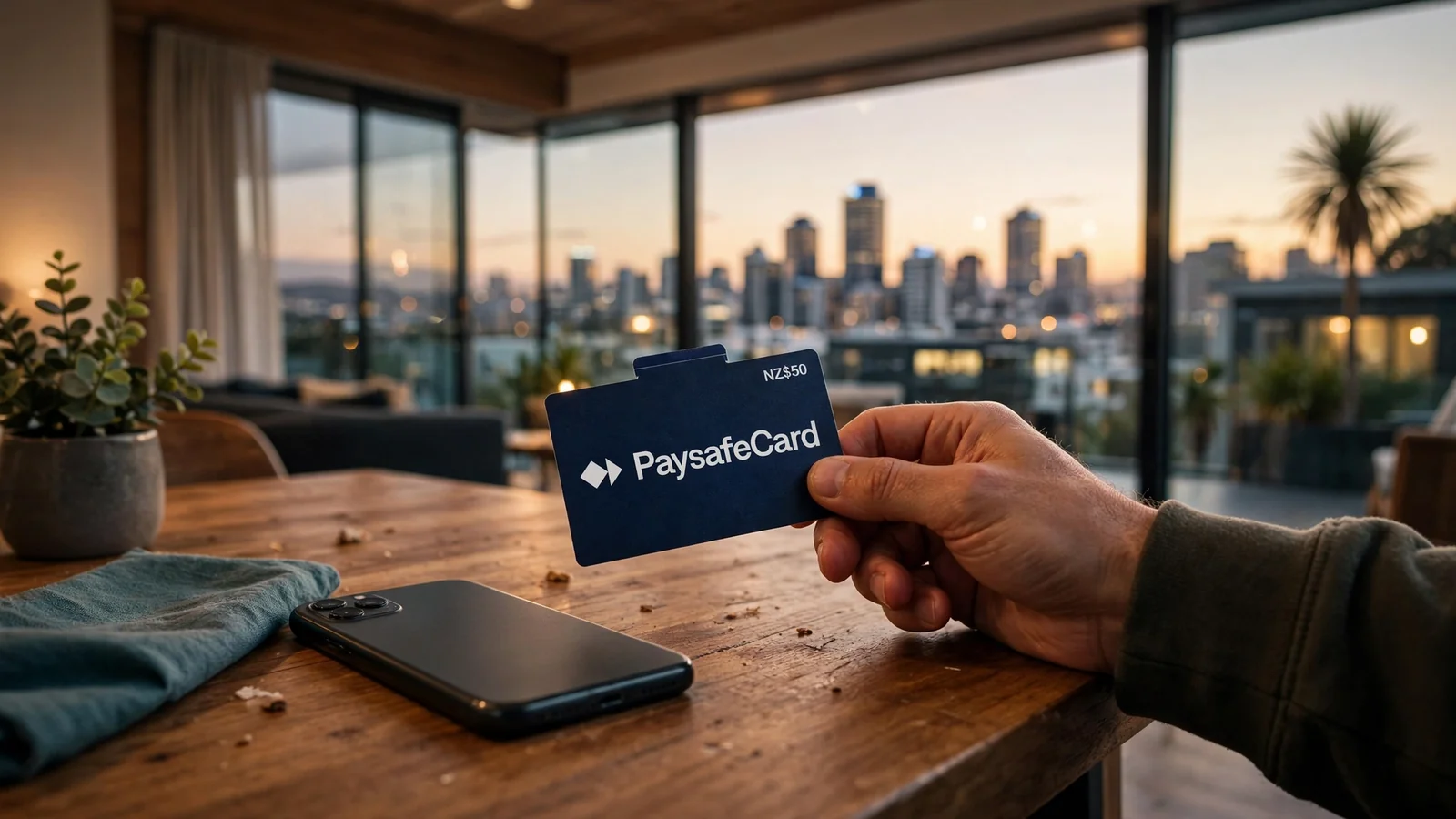
If play stops feeling like entertainment, step away. You do not need to wait for a particular loss or a bad session to take a break. The purpose of a plan is to give you a clear stopping point before emotions take over; honouring it matters more than trying to turn a session around.
Are online pokies legal in New Zealand?
Yes, the Gambling Act 2003 targeted operators running online casinos from within New Zealand, not players. Offshore sites were not licensed or supervised by a New Zealand regulator before the new licensing regime.
Is any online casino licensed in New Zealand?
The domestic licensing framework began on 1 May 2026, but the full licensed regime is not expected to be operational until 2027. Operators serving New Zealand customers before the Act took effect may continue under transitional provisions until 1 December 2026; that is not the same as holding a full licence.
When will New Zealand launch online casino licenses?
The licensing framework came into force on 1 May 2026, and the full regime is expected to be operational in 2027.
Will online gambling winnings be taxed in New Zealand?
No. Gambling winnings are not taxed in New Zealand.
Are NZ online casino licenses active yet?
The framework took effect on 1 May 2026, but the full licensing regime is not expected to be operational until 2027.
How many NZ online casino licenses will be available?
The framework is expected to allow up to 15 online casino licences initially.
Prepared by the Casino Experts NZ editorial staff.