Blackjack Tables in New Zealand: Rules and Play
 Available in US
Blackjack is played against the dealer, and table rules shape decisions on hands, bets and payouts across live and digital games.
Table of Contents
- How a Blackjack Table Works
- Blackjack Rules, Soft 17 and Payouts
- Online and Live-Dealer Blackjack in New Zealand
- Strategy Starts with the Table Rules
- Betting, Chips and Electronic Tables
- When to Hit or Stand
- Where to Sit at a Blackjack Table
- Reading Blackjack Cards and Tables
- A Blackjack Cheat Sheet for Your Decisions
- Table Limits and the Fine Print
How a Blackjack Table Works
Blackjack is a contest between each player and the dealer, not a contest among the people seated at the same table. The aim is to finish with a hand closer to 21 than the dealer’s hand, without going over 21. That simple comparison is the organising idea behind the game, whether you are looking at a physical table or a digital one.
The dealer represents the house and manages the shared game. Players make decisions about their own hands, while the dealer’s hand provides the point of comparison. Other players may be taking part at the same time, but their cards do not determine whether your hand beats the dealer’s. A player can have a stronger hand than someone nearby and still lose to the dealer; equally, another player’s weaker hand does not make your own hand stronger.
This is useful to understand before you sit down. The table can look communal, with several places for players around one dealer, but the central question is individual: how does your hand compare with the dealer’s? You are not trying to collect more points than the other people at the table, and their choices do not turn the game into a team effort. Each player is pursuing the same objective against the same dealer.
Choosing a blackjack table in New Zealand in 2026 means weighing the information available about each casino before you play. Use these brief verdicts as a starting point for your own checks.
License: Curaçao Gaming Authority, licence no. OGL/2024/165/0185 BitStarz lists a Curaçao Gaming Authority licence, number OGL/2024/165/0185. You can use that licence detail as one point to check when considering the casino.
License: Tobique Gaming Commission, licence no. 0000064 Neospin lists a Tobique Gaming Commission licence, number 0000064. You can take this licensing information into account when assessing the casino.
Payout speed: 1-3 business days Lamabet has a stated payout speed of 1–3 business days. If payout timing matters to you, that is a detail to consider.
License: Tobique Gaming Commission, licence no. 0000002 Ricky Casino lists a Tobique Gaming Commission licence, number 0000002. You can use this licence information as part of your assessment.
License: 07017519840 · Payout speed: 1-3 business days Zotabet has a stated licence identifier, 07017519840, and a payout speed of 1–3 business days. These are the available details to consider when deciding whether it suits you.
Payout speed: 1-3 business days Wintino has a stated payout speed of 1–3 business days. You can factor that timing into your choice.
License: Tobique Gaming Commission, licence no. 0000091 7Bit Casino lists a Tobique Gaming Commission licence, number 0000091. This gives you a specific licensing detail to check when considering the casino.
License: Malta Gaming Authority, licence no. MGA/B2C/394/2017 N1 Casino lists a Malta Gaming Authority licence, number MGA/B2C/394/2017. You can include this licence information in your assessment.
License: Malta Gaming Authority, licence no. MGA/B2C/370/2017 Play Grand lists a Malta Gaming Authority licence, number MGA/B2C/370/2017. You can use that licensing detail as one part of your decision.
The number 21 is the target, not a score you must reach exactly. Finishing below it can still be enough if the dealer’s hand is lower. Going over it means you have exceeded the target, so being closer is no longer an advantage. That gives blackjack its basic tension: a hand can improve as it approaches 21, but the goal is not simply to keep adding until the target is reached. The comparison with the dealer matters, and so does staying within the limit.
A table’s layout makes the roles visible. At a physical casino table, the dealer occupies one side and players have separate places for their hands on the other. In an online version, the screen represents the same basic relationship, though the appearance and controls can differ. In either format, look for the area that identifies your own hand and the dealer’s hand. If several people are playing, keeping those separate helps you follow whose result is being compared with whom.
The word “table” can refer to both the game and the place where it is offered. A live blackjack table presents a dealer and a game in progress; a software-based table may display the same dealer-versus-player structure through a digital interface. The central aim remains recognisable across those settings: your hand is measured against the dealer’s, with 21 as the upper boundary. The setting can change how the game is presented, but it does not change that basic relationship.

It is also worth separating the table’s shared structure from a player’s private decisions. Everyone can see the dealer as the common opponent, while each player is responsible for their own hand. A choice made by someone else may affect the pace or feel of the table, but it does not alter the objective for your hand. This is why blackjack can be played at a table with several participants without requiring them to coordinate. They are alongside one another, but each is playing against the dealer.
A beginner may find the layout easier to read by following the two sides of the comparison rather than trying to take in everything at once. First identify the dealer’s hand. Then identify the hand assigned to you. The point is not to compare your cards with a neighbour’s or to treat the table as a shared pool of points. It is to understand the result that matters for your own play: whether your hand finishes closer to 21 than the dealer’s without passing 21 yourself.
That is the basic frame for blackjack. The dealer is the opponent, 21 is the ceiling, and the outcome depends on how your hand compares with the dealer’s. The details that shape a particular game sit on top of that framework, so it helps to keep the central contest clear before considering any table’s specific terms or options.
Blackjack is a contest between each individual player and the dealer, not a competition among the people seated at the same table.
Blackjack Rules, Soft 17 and Payouts
Two blackjack tables can look alike and still play by different rules. Before you join, read the game’s information panel or posted rules rather than relying on the table name. The details that matter include how many decks are used, what the dealer does on soft 17, whether surrender is available and how a natural blackjack is paid. These conditions can affect what happens during a hand and what a win returns.
A specialist review describes natural blackjack payouts of 3:2 at some tables and 6:5 at others. Treat those figures as examples reported by that review, not as a promise about every game available in New Zealand. Check the payout stated for the specific table you are considering. A natural blackjack is an opening hand made up of an ace and a card worth 10; it is distinct from reaching the same total after taking further cards. The payout rule tells you how that opening hand is settled, so a table’s general description is not a substitute for its full terms.
The number of decks is another point to check. The cards may be dealt from a single deck or from multiple decks, but the game’s description should tell you which arrangement applies. Do not assume that a familiar table layout means the same deck setup as another game. A specialist review also notes that deck count can differ between games, alongside the dealer’s soft-17 rule, surrender conditions and blackjack payout. It is the written rule for the table—not a general impression of casino blackjack—that governs your hand.

Soft 17 refers to a hand containing an ace counted as 11 while the total is 17. The dealer may be required to hit that hand or to stand. Look for the rule in the table information, sometimes stated as “dealer hits soft 17” or “dealer stands on soft 17”. Those instructions describe the dealer’s required action; they do not give you a choice to alter it. If the wording is unclear, look for the game’s help or rules panel before betting.
Surrender is an option that may let you give up a hand under the conditions set by the table. It is not available everywhere, and the rules determine when it can be used and how the hand is settled. Do not assume that surrender is permitted simply because you have seen it at another table. The same caution applies to doubling down and splitting: these are recognised blackjack actions, but whether they are offered, and under what conditions, depends on the particular game’s rules. If a table does not allow doubling down, that restriction is part of the game; it does not create a separate payout rule or ensure a win.
A table’s rule panel should make these distinctions clear. Check the number of decks, the dealer’s action on soft 17, natural-blackjack payout and whether surrender, doubling down and splitting are permitted. If any term is difficult to interpret, consult the game’s explanation before you start rather than trying to resolve it in the middle of a hand. Rules can vary even where the basic format is familiar, and a short label may not spell out every condition.
Before Joining a Table
- Confirm the payout for a natural blackjack
- Read the soft-17 instruction
- Verify which actions (surrender, doubling down, splitting) are permitted
- Check the number of decks in use
The word “price” can also cause confusion when comparing tables. The rules and payouts are separate from the amount you choose to stake; a displayed table limit concerns the permitted bet, while the payout describes how a winning hand is settled. Check both in the game information, and do not infer one from the other. A table with a different stake range is not necessarily using different blackjack rules, just as a similar-looking table is not necessarily using the same ones.
A quick check before play can prevent a avoidable surprise: confirm the payout for a natural blackjack, read the soft-17 instruction, and verify which actions the table allows. These are specific conditions, not details to fill in from memory. When the rules are explicit, you can decide whether that version of blackjack suits you before a hand begins.
Online and Live-Dealer Blackjack in New Zealand
An online blackjack table can use either a random number generator (RNG) or a live dealer. The difference is more than appearance: one deals cards through software, while the other uses physical cards and sends the game to your screen as a stream. That can affect the pace of a hand and how much time you spend waiting for the next one.
RNG games and live streams
In an RNG game, software shuffles and deals the cards. With no live stream to wait for, hands can move faster than they do at a live-dealer table. That suits players who prefer a quicker pace, but it also means the game is generated digitally rather than shown as a dealer handles cards.

Live-dealer blackjack uses actual cards. A camera stream lets you watch the dealer run the table, making the format resemble a casino game more closely. The stream introduces a practical complication: a delay in the video or connection can slow the game. Live tables may also require higher bets than some RNG games, so check the displayed terms before joining rather than assuming every online table has the same entry conditions.
Neither format removes the need to understand the game being offered. The label “blackjack” does not tell you whether the table is RNG or live, and a live stream does not by itself establish what rules apply. Read the information attached to the particular game before playing. The format explains how cards are dealt; the table’s own terms explain how that game is run.
What New Zealand’s 2026 framework means
The regulatory picture in New Zealand is changing during 2026. The Online Casino Gambling Act 2026 came into force on 1 May and created the country’s first domestic licensing framework for online casino gambling. The transition runs from that date until 1 December 2026. During this period, online casinos that were already serving people in New Zealand before the Act began may continue operating, subject to the transition provisions. The full licensing regime is not expected to be operating until 2027.
Regulatory Status
Seeing a table available to New Zealand players in 2026 does not necessarily mean the provider holds a New Zealand licence due to transitional provisions.
This means that seeing an online blackjack table available to New Zealand players in 2026 does not, by itself, show that its provider holds a New Zealand licence. The transitional permission applies to providers that were already operating before the Act took effect; it is not a general route for new services to enter the market. Before the new framework, offshore online casino gambling was not licensed or supervised by a New Zealand regulator, and customers had no domestic government recourse if a dispute arose.
The Department of Internal Affairs (DIA) is New Zealand’s primary gambling regulator and oversees the online casino licensing framework. The Gambling Commission has a distinct role: it issues online casino licences, approves changes to licence conditions, and hears and decides casino licensing applications. These responsibilities describe the framework and its regulators; they should not be mistaken for confirmation that a particular table or provider is licensed.
For you, the practical point is to separate the game format from the regulatory status. RNG and live-dealer describe how a blackjack game is delivered, not whether its provider has permission under New Zealand’s developing licensing system. A streamed dealer may make the experience feel closer to a casino table, but the video is not evidence of regulatory approval. Likewise, a software-dealt game’s faster pace tells you nothing about the provider’s standing.
When comparing an online blackjack table with a live stream, consider both what is on screen and what the New Zealand transition allows. Check whether the game is software-dealt or uses a live dealer, and read the provider information alongside the table’s terms. In a market moving from offshore provision toward domestic licensing, those are separate questions, and treating them as one can leave an important gap in your understanding.

Strategy Starts with the Table Rules
A blackjack strategy is not a set of decisions that works identically at every table. The game’s rules affect the choices available and can change the house edge—the casino’s mathematical advantage over time. A chart or rule of thumb may therefore be useful at one table and less suitable at another. Before relying on a strategy, check that it matches the game you are actually playing.
This matters even when two tables look much the same. Differences in how a dealer handles a soft 17, how many decks are in use, whether surrender is permitted, and what a natural blackjack pays can all affect the calculations behind a recommended play. These details do not make one decision automatically right or wrong in isolation; they change the conditions the decision is based on. A strategy that ignores them is answering a different game.
Match the reference to the table
Basic strategy is a guide to the mathematically preferred action for a hand under a specified set of rules. It is not a promise of a win, nor does it remove the uncertainty of a particular hand. If you use a basic-strategy chart, check its stated assumptions rather than treating every chart as interchangeable. Look for details such as the dealer’s soft-17 rule and whether the chart accounts for surrender.
- Match your strategy chart to the specific table rules
- Check the dealer’s soft-17 rule and surrender options
- Identify the assumptions behind probability references
- Treat every basic-strategy chart as interchangeable
- Assume a strategy from one table carries over to another
- Rely on a chart that ignores the current game’s conditions
The same care applies to probability references. A blackjack probability table can describe the likelihood of particular outcomes, but its figures depend on the game conditions being modelled. Deck composition and rules matter; a table that does not identify its assumptions may be hard to apply. Read it as a guide to a defined situation, not a forecast of what will happen in your next hand.
The payout display also belongs in this check. A blackjack pay table tells you how the game treats winning outcomes, including a natural blackjack. If its terms differ from the assumptions behind a strategy chart, the chart may no longer be an exact fit. That is a small print detail with a direct mathematical consequence.
Surrender needs particular attention because it is available only at some tables and can be restricted by the rules. A blackjack surrender table, where one is provided, is useful only if it reflects the version you are playing. Confirm when surrender is allowed and whether the reference covers that option before using its guidance. The same principle applies to any optional action: a chart cannot recommend a choice the table does not permit.
A private blackjack table does not, by itself, tell you which rules apply or make a strategy more favourable. The relevant information is still the game’s posted terms. If those terms are not clear, avoid assuming that a strategy from another table carries over.
Card counting and its limits
Card counting means keeping track of cards that have appeared to estimate how the remaining cards may affect the game. Counting by mental calculation alone is not illegal under New Zealand law. That legal point is separate from whether counting is practical, permitted under a particular operator’s terms, or likely to improve a player’s results.
It is not a guaranteed way to win. The estimate can be wrong, and a run of hands can still go against you. In an online game that automatically shuffles the cards, there is no persistent sequence of dealt cards for a count to track, so mental card counting does not provide the same basis for decisions as it might in a game with a continuing shoe. Do not mistake the legality of mental arithmetic for evidence that it will work in every format.
Insurance is another option that can look protective but is generally best avoided by most players. Treat it as a separate wager, not as a routine way to secure a hand.
A sound starting point is modest: read the table’s rules, then use guidance built for those rules. Strategy can organise decisions, but it cannot make different blackjack variants mathematically identical.
Betting, Chips and Electronic Tables
A blackjack wager is the stake attached to your hand. At a physical table, chips make that stake visible to the dealer and other players. You place them in the betting area assigned to your seat before the hand begins; once play is under way, the wager is generally treated as set unless the rules allow an additional action, such as doubling down. The exact process depends on the table, so follow the dealer’s instructions rather than moving chips after the hand has started.
Chip colours represent different denominations; always verify the value assigned to each colour before placing your wager.
Chips are not all interchangeable in meaning. Their colours can represent different denominations, and the value assigned to each should be clear before you bet. If it is not, check the table information or ask the dealer. This matters when you are joining a game already in progress: a stack can look substantial while representing a different value than you assume. Keep your chips in your own betting area and make your wager easy to identify.
The bet remains connected to the hand as it develops. If you double down or split, you are changing how much is committed to the play, subject to the table’s rules. Those actions are not merely gestures with chips; they alter the stake at risk. A bet should therefore be an amount you have chosen in advance, not one selected under pressure because another player has acted or because a previous hand went badly. No staking pattern can remove the uncertainty of the game.
An electronic blackjack table changes how the wager is represented, not the basic purpose of betting. Instead of handling physical chips, you may select or enter a stake through the game’s controls, with the amount shown on screen. The exact layout and steps vary, so take time to understand how the game records a bet, confirms an action, and displays the result before committing money. Do not assume every electronic game uses the same controls or presents the information in the same place.
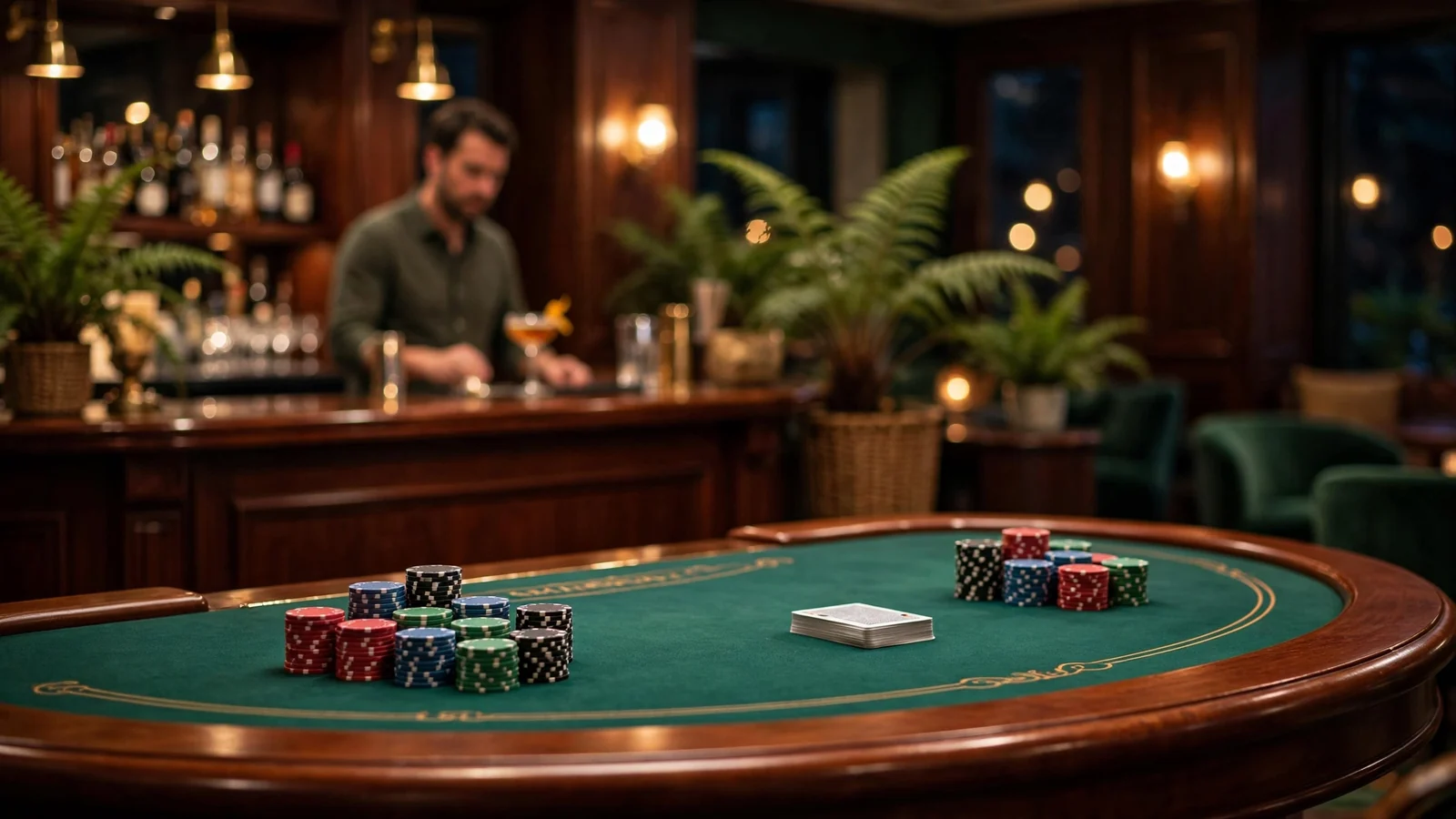
Physical and electronic play also feel different at the point of making a wager. At a live table, chips and dealer instructions are part of the shared pace of play. On an electronic game, actions are handled through a screen, and the game may proceed without the same pauses for table interaction. Neither format changes the need to understand what you have staked. A button or chip placed quickly is still a real bet.
Before joining, read the table’s stated terms and make sure the betting process is clear to you. Check how the game handles permitted actions and any changes to a wager, rather than relying on habits from another table. If you cannot tell what amount is committed, pause before continuing. The useful distinction is simple: chips or screen controls are ways of recording a wager; they are not a reason to increase it.
When to Hit or Stand
Hit and stand are the two basic ways to respond while a hand is in progress. To hit is to ask for another card; to stand is to keep the cards you have and take no more. Your choice depends on your hand and the dealer’s visible card, but neither action guarantees a particular result. A new card can improve your total or take it over 21, while standing leaves the current total unchanged.
Deciding to Hit or Stand
Determine your current total and identify the dealer’s visible upcard.
Check a hit-or-stand table that matches the specific rules of your current game.
Confirm if the suggested action is permitted under the table’s conditions before acting.
A blackjack hit-or-stand table can help organise decisions by showing a suggested action for different combinations of your hand and the dealer’s upcard. Treat it as a reference, not a rule that overrides the game you are playing. A chart may assume particular table rules, and the available actions can vary. Check that the choices it describes are allowed at your table before relying on it.
Doubling down and splitting are other possible decisions, where the rules permit them. When you double down, you increase your wager and take a further card; it is a more committed choice than simply hitting. Splitting applies when your first two cards form a pair: you separate them into two hands and play each hand in turn. The opportunity can change how a round unfolds, but it also means you are playing more than one hand. Check the table’s conditions before choosing either action, since permissions can differ.
If you are wondering when to hit in a particular situation, first identify your hand and the dealer’s visible card, then consult a reference that matches the rules. Avoid treating a single row as a universal answer: the dealer’s card matters, and a chart built for a different version of blackjack may point to a different move. If you are unsure whether an option is permitted, ask before acting rather than assuming every table offers the same choices.

A table marked with a $5 minimum does not, by that label alone, tell you the maximum bet. Minimum and maximum stakes are separate conditions, so check the limit shown for that specific game before you sit down. If the limit is unclear, confirm it with the dealer or the game’s help panel. That is a practical check, not a strategy: knowing what actions are available and what they commit you to helps keep each decision deliberate.
Where to Sit at a Blackjack Table
There is no seat at a blackjack table that puts you closer to 21 or makes the dealer more likely to go over. The game is played against the dealer: your aim is to finish nearer to 21 than the dealer without exceeding it. Where you sit changes your view and the way you take part, not that basic contest.
If you are choosing a seat in person, start with what you can see and hear. A clear view of the cards and the dealer’s actions makes it easier to follow the hand. If a seat feels cramped, or you have to lean around someone to see the table, another position may be more comfortable. The most practical choice is often simply the one where you can pay attention without strain.
Your place around the table also affects how directly you interact with the dealer. Some players prefer a position where they can hear instructions clearly and make their decisions without feeling rushed by nearby conversation. Others are comfortable in a busier part of the table. Neither preference changes the game’s outcome; it can only make the experience feel more or less relaxed.
Seating Tip
Choose a seat based on comfort and a clear view of the cards and dealer’s actions to help you follow the hand without strain.
At a live table, take a moment to observe before joining. Notice whether players are already acting and whether there is room for you to participate without interrupting. If you are unsure where to sit or how to join, ask the dealer rather than guessing. A brief question can clarify what to do without requiring you to copy another player’s actions.
The same principle applies when a game presents seats on screen. Choose an available position that makes the layout easy for you to follow, if the game offers a choice. A seat graphic is not a signal about the cards, and changing positions should not be treated as a way to influence a hand.
The “best place to sit” is therefore a matter of comfort and visibility, not advantage. Do not choose a position because someone claims it changes your odds or gives you control over the dealer’s result. Focus instead on being able to follow the hand and make your own decisions clearly.
Reading Blackjack Cards and Tables
A blackjack chart is easier to read when you first know what each card contributes to a hand. Number cards count at their printed value, while jacks, queens and kings each count as ten. An ace is flexible: it can be treated as one or eleven, depending on which value fits the hand without taking it over twenty-one.

That flexibility is why charts often distinguish between hard and soft totals. A soft total includes an ace counted as eleven; a hard total either has no ace or counts the ace as one. If the ace’s higher value would push the hand over twenty-one, its lower value keeps the hand in play. The same cards can therefore be described by different totals as a hand develops.
When you look at a blackjack table chart, check what its labels refer to before interpreting a cell. One axis may describe your hand total, while another identifies the dealer’s visible card. The cell where those labels meet represents the chart’s suggested action for that combination. It is a reference for a particular set of rules, not a statement about what every table requires.
Some charts separate hands into hard totals, soft totals and pairs. A pair means two cards of the same rank; it is not the same category as a soft hand, even if the cards add to the same total. Read the chart’s key, if it has one, so you know how it marks each category and each available action. Symbols can differ between charts.
Hard vs Soft Totals
A soft total includes an ace counted as eleven. A hard total either has no ace or counts the ace as one; this prevents the hand from exceeding twenty-one.
A blackjack card table can also refer simply to a guide showing card values. Use that to calculate the hand, then use a decision chart only if its labels match the hand and dealer card in front of you. Treating the two as interchangeable can lead to a misread: one explains what the cards count for, while the other maps a situation to an action.
A Blackjack Cheat Sheet for Your Decisions
Use this as a quick reference to the choices a blackjack table may offer. It names the actions, but it does not tell you which one to choose in a particular hand. The available choices and their conditions depend on the table, so check its rules before you play.
| Action | What it means |
|---|---|
| Hit | Ask for another card to add to your hand. |
| Stand | Take no more cards and keep your current hand. |
| Double down | Increase your bet in exchange for taking another card under the table’s rules. |
| Split | Separate a pair into two hands when the table permits it. |
| Surrender | Give up the hand under the table’s surrender rules. This option is not available everywhere. |
The first four actions are part of blackjack play, though rules can set conditions on when you may use them. Surrender is another possible choice, not a standard option at every table. The label alone is not enough: read the specific conditions shown for the game rather than assuming the same action works the same way everywhere.
Keep the distinction between an action and a recommendation in mind. “Hit” describes taking another card; it does not, by itself, mean you should hit. “Stand” describes ending your turn without drawing; it does not mean standing is always the better decision. This sheet is a vocabulary aid, not a substitute for learning how decisions change with the hand and the table rules.
Before a hand begins, make sure you can identify which actions are available and understand any conditions attached to them. If the table offers surrender, check how that option works there. If a rule or label is unclear, pause to consult the game information instead of guessing during play.
A useful blackjack table cheat sheet should help you recognise your choices at a glance, not promise a winning move. Your next decision still depends on the game in front of you.
Table Limits and the Fine Print
A blackjack table’s limit is only one part of its terms. The number of decks, the dealer’s action on soft 17, surrender availability and the payout for a natural blackjack can differ between games. Read the rules shown for the specific table before you sit down; a label or familiar layout does not establish that the conditions match another game.
Limits tell you the permitted betting range, but the amount you can comfortably risk is a separate decision. Set a budget before playing and treat it as money you may lose. If you reach that amount, stop rather than trying to recover losses by increasing your bets. A table limit is not a spending target.
Read the full conditions before accepting a bonus. Check how blackjack contributes to wagering requirements, since it may count differently from other games. Look for maximum-bet rules that apply while meeting those requirements, too. A bet that exceeds a stated maximum can affect whether bonus conditions are met, even when it falls within the table’s own limit. The two sets of terms answer different questions: one concerns the game, the other the promotion.
A specialist review has reported natural-blackjack payouts of 3:2 at some tables and 6:5 at others. Treat that as a reason to inspect the payout stated in the game itself, not as a promise about what a particular New Zealand table offers. Terms can change, and the displayed rules are the practical reference for the game you are considering.
Before playing, make sure you can find the table’s betting limits, rule details and payout conditions, then read the bonus terms separately if you plan to use one. If any condition is unclear, do not assume the more favourable interpretation. A small amount of checking can prevent a mismatch between what you thought you accepted and what the table actually requires.
Created by the ”Casino Experts NZ” editorial team.