Playing Keno in New Zealand: How Draws Work
 Available in US
A practical guide to selections, matching results, prize tables, draw timing and the rules for Keno in New Zealand.
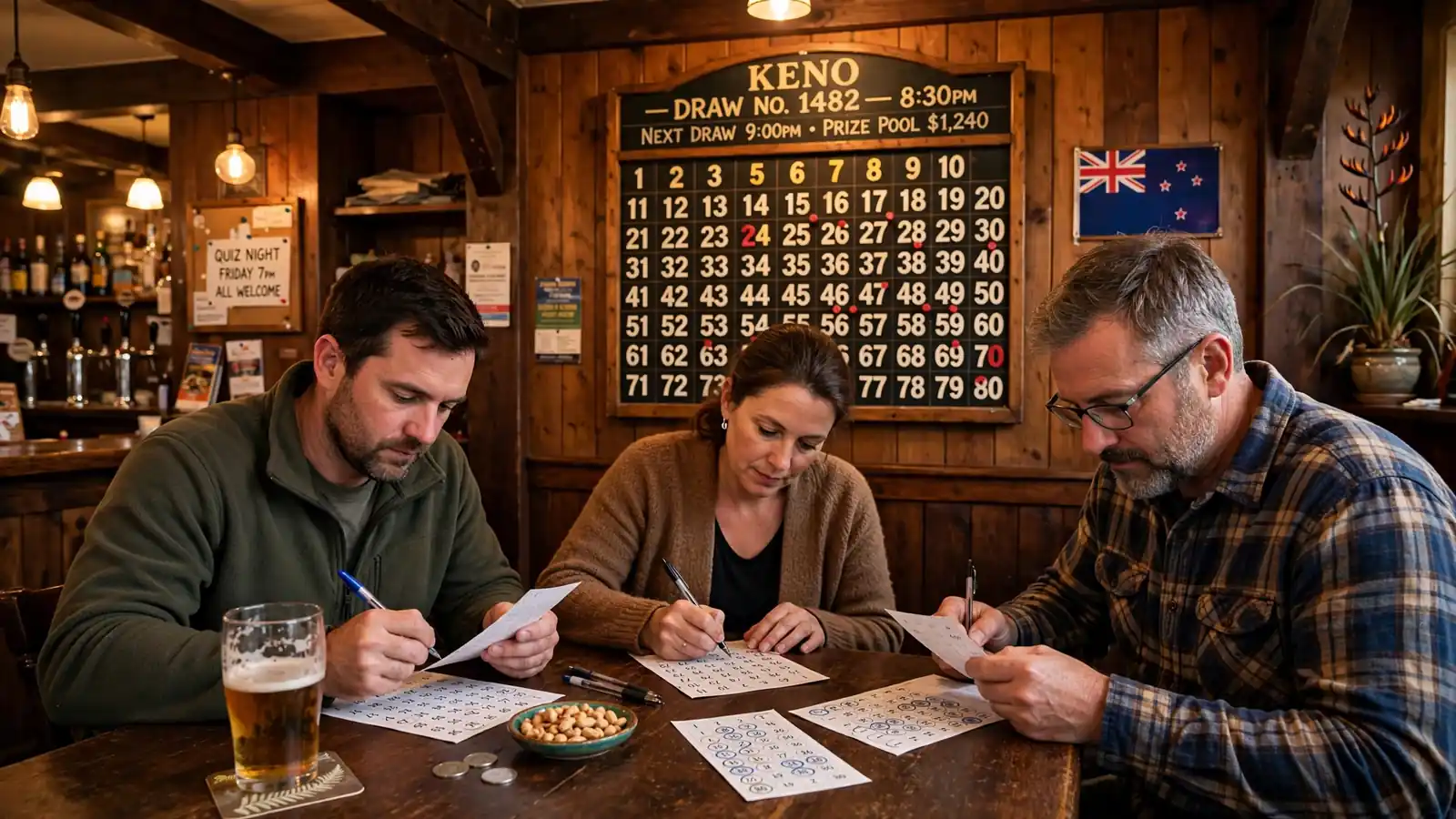
Table of Contents
- How a Keno Draw Works
- How Many Numbers Do You Need to Match to Win?
- Keno Rules: Entry Times and Unclaimed Prizes
- Keno in New Zealand: Draw Schedule and Entry Cost
- Daily Keno and Playing on Mobile
- How to Read the Keno Prize Table
- Keno Payout Charts: What Determines a Payout
- Keno Winners and the Limits of Draw Analysis
- Does Keno Work the Same Way Each Time?
- Is There a Maximum Keno Win in New Zealand?
How a Keno Draw Works
Keno is built around a fixed pool of numbers and a draw from that pool. In Keno NZ, the pool contains 80 numbers, and 20 are drawn for each game. The “10/80” label sometimes used for Keno describes a version in which a player may select up to ten numbers from a pool of 80; it does not mean that ten numbers are drawn. The draw itself contains 20 numbers.
To understand the basic process, keep the player’s selection separate from the draw. You choose numbers from the available pool, while the game produces its own set of drawn numbers. The draw is not a selection of your chosen numbers: it is made from the pool of 80. Once the 20 drawn numbers are known, the result can be compared with the numbers you selected.
A simple way to picture the process is as two sets drawn from the same larger set. One set is your selection; the other is the 20 numbers produced by the Keno draw. The pool is the shared starting point, but the two sets have different roles. Your selection records which numbers you want to play. The draw determines which numbers appear in that game.
Choosing where to play keno in New Zealand means checking the details that matter to you before signing up. Use these brief notes as a starting point, and verify any terms relevant to your play directly with the operator.
License: Curaçao Gaming Authority, licence no. OGL/2024/165/0185 You can note the listed Curaçao Gaming Authority licence, number OGL/2024/165/0185, as a concrete detail to verify when considering this operator.
License: Tobique Gaming Commission, licence no. 0000064 You can check the listed Tobique Gaming Commission licence, number 0000064, as part of your research into this operator.
Payout speed: 1-3 business days You’re given a payout speed of 1–3 business days, a useful detail to consider if withdrawal timing matters to you.
License: Tobique Gaming Commission, licence no. 0000002 You can check the listed Tobique Gaming Commission licence, number 0000002, as a specific point of reference.
License: 07017519840 · Payout speed: 1-3 business days You’re given a licence reference of 07017519840 and a payout speed of 1–3 business days. Check the licence details and payout terms directly if they matter to your decision.
Payout speed: 1-3 business days You’re given a payout speed of 1–3 business days, which may help you assess whether the stated withdrawal timing suits you.
License: Tobique Gaming Commission, licence no. 0000091 You can check the listed Tobique Gaming Commission licence, number 0000091, as part of your consideration.
License: Malta Gaming Authority, licence no. MGA/B2C/394/2017 You can check the listed Malta Gaming Authority licence, number MGA/B2C/394/2017, as a specific detail when researching this operator.
License: Malta Gaming Authority, licence no. MGA/B2C/370/2017 You can check the listed Malta Gaming Authority licence, number MGA/B2C/370/2017, as part of your research.
For Keno in New Zealand, the confirmed selection range is between one and ten numbers. There is, however, a disagreement in descriptions of the game: another version says that online Keno players may select between four and twenty numbers. Those ranges cannot be treated as interchangeable. If you are looking at a particular online game, its stated rules matter; the existence of a wider range in one description does not establish that every Keno NZ entry permits it.
This distinction is important because “how many numbers are drawn?” and “how many numbers can I select?” are separate questions. The draw contains 20 numbers from the pool of 80. A player’s selection may contain a different number of choices, within the range allowed by the version being played. The number drawn is therefore not necessarily the number selected.
The game’s basic structure can be followed in a few stages: identify the pool, make a selection within the applicable range, and then allow the draw to produce its 20 numbers. The pool remains the reference set for both parts. You do not need to treat the 20 drawn numbers as a new pool, or assume that a selection must contain 20 numbers because the draw does.
Keno is a number-selection game, but choosing numbers does not control which numbers the draw produces. The drawn set is random. A selection is simply the set of numbers entered for that game, not a prediction that changes the draw. This is why it helps to keep the mechanics separate from any later question about what a result means: first, the game produces the draw; then the selected numbers and drawn numbers can be compared.


The same basic description applies whether you are trying to understand how Keno works in New Zealand or how a Keno 10/80 game is structured: there is a pool of 80, and the draw takes 20 numbers from it. The selection range is the part that needs care because descriptions conflict. One states that Keno players choose from one to ten numbers; another gives an online range of four to twenty. A game’s own rules should make clear which selection options apply to that entry.
That is the foundation of a Keno draw. The pool sets the available numbers, the player makes a selection within the relevant game’s range, and the draw produces 20 numbers from the pool. The mechanics do not by themselves say what a particular result pays or whether it wins; those questions depend on how the selected numbers relate to the numbers drawn.
How Many Numbers Do You Need to Match to Win?
There is no single match count that answers every Keno win question. Your result depends on how many numbers you selected and how many of those selections appear among the numbers drawn. A match is one of your chosen numbers appearing in the draw; the total number of matches is often called your hit count.
A match occurs when one of your chosen numbers appears in the draw; the total number of these matches is known as your hit count.
In a 20-number Keno game, exactly 20 numbers are drawn. To work out your result, compare that drawn set with your own selection and count the numbers they share. Numbers drawn that you did not select do not add to your hit count. Likewise, a number on your ticket that does not appear in the draw is not a hit.
The selection size matters because the same hit count can mean different things on different plays. Matching several numbers from a small selection is not the same outcome as matching that many from a larger selection. Keno’s prize structure relates both the number selected and the number matched to the payout. So there is no universal answer such as “match this many and you win” that applies to every selection.
What counts as a winning result?
A winning result is determined by the relevant prize table for the game and selection you played. The table connects the size of your selection with the number of hits and shows which combinations receive a prize. A hit, by itself, does not establish that your entry has won: you need to compare the hit count with the correct row for your selection.
This distinction is useful when checking a ticket. First identify how many numbers you chose. Then count how many of those appear in the draw. Finally, read the prize information for that selection and hit count. Looking only at the number of matches, without the selection size, can give a misleading impression of the result.
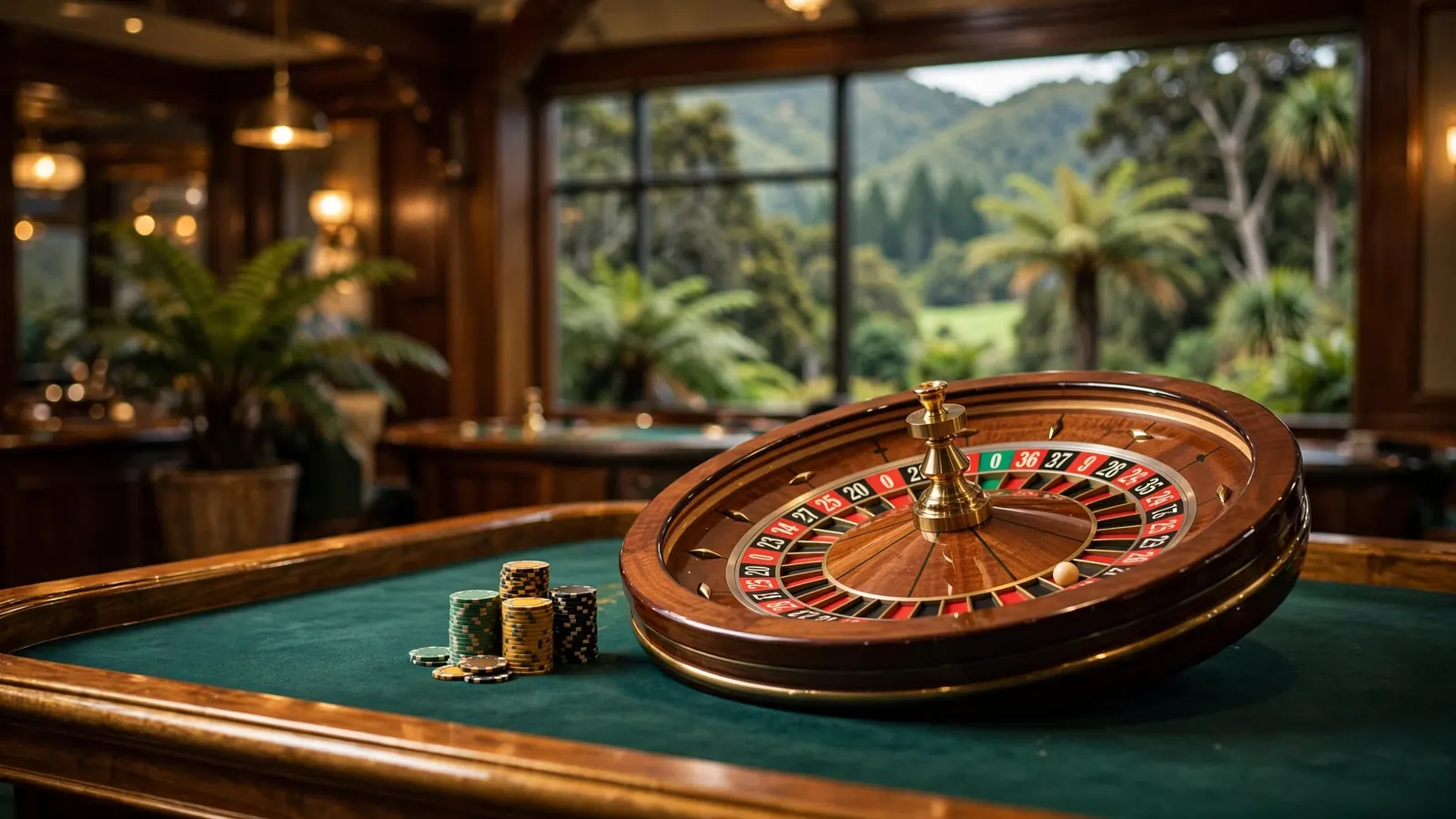
Players can choose between one and ten numbers in Keno, although published descriptions disagree: another version gives a range of four to twenty for online Keno. That disagreement matters when interpreting advice or a prize table, since a table for one selection range may not describe another. Check that the rules and table you are using apply to the specific Keno game and entry channel in question.
How much could a match be worth?
The value of a result depends on the combination of selected numbers and hits. More hits do not have a fixed cash value across every possible selection, and a stated hit count cannot be turned into a reliable estimate without the applicable prize table. If you want to know what a particular ticket has won, use its selection size and actual hit count with the table for that game.
That is also why “how many numbers do you need to match to win Keno NZ?” cannot be answered with one number. The practical answer is: match a combination that the relevant prize table lists as a prize for your selection. Choosing more numbers does not remove the need to check the table, and matching some of your choices does not by itself guarantee a payout.
Checking a Ticket
Determine how many numbers you chose for your entry.
Compare your selection with the 20 drawn numbers and count how many they share.
Locate the row for your selection size and the column for your hit count to find the payout.
Do hot numbers change the number of hits you need?
Lists of the most drawn or “hot” Keno numbers describe past results, not a different way of calculating a ticket. A number appearing often in previous draws does not alter how many of your selections must match for a prize. Nor does a number being less common in past results change the prize-table conditions.
Keno results are independent random events. Past frequency does not make a particular number more likely to appear in the next draw, so a list of frequent numbers cannot tell you how many matches your next entry will have. It may be interesting as a record of previous draws, but it is not a shortcut to a winning combination.
If you are checking Keno NZ tonight, the same basic comparison applies: count the numbers shared by your selection and the draw, then consult the matching prize information. The draw’s result determines the hits; the applicable table determines whether that combination pays. A selection method can shape which numbers you have chosen, but it cannot make a particular hit count certain.
Keno Rules: Entry Times and Unclaimed Prizes
For a Keno entry to count for a particular draw, it must be placed before that draw’s scheduled time. The cutoff is the draw time itself, not a later moment when results become available. If you intend to enter a specific draw, leave enough time to complete the entry beforehand rather than assuming a late submission will be accepted.

That distinction matters when you are playing Keno in New Zealand in 2026: selecting an entry is not the same as having it accepted for the draw you intended. A transaction started near the cutoff may not be completed in time. If it is not accepted before the scheduled draw time, do not assume it will be included in that draw. Check the details shown when you submit and keep any confirmation provided.
Before the cutoff
Make sure you have identified the draw you want to enter and that your selection has been submitted in time. A screen left open, an uncompleted form or an entry you meant to place does not establish that you have entered. The practical rule is straightforward: the accepted entry must be in before the scheduled draw time.
If you are unsure whether an entry went through, check its status rather than placing another one automatically. A second entry could be a separate purchase, not a correction to the first. The exact process for checking or correcting an entry depends on the channel used, so rely on the confirmation and applicable terms for that channel.
The cutoff also matters if you are reviewing an entry after the draw. Keep the ticket or confirmation until you have checked it and dealt with any prize. Do not rely on memory alone, especially if you have entered more than once. These are sensible record-keeping steps, not a separate way to alter an entry after the draw has closed.
If a prize is not claimed
An affiliate review reports that an unclaimed Keno NZ prize is forfeited after 12 months, with the money returned to the Prize Reserve Fund. That is a specific account from a third-party review, not a rule that should be treated as a settled, current market-wide condition without checking the applicable official terms.
Unclaimed Prizes
Unclaimed Keno NZ prizes may be forfeited after 12 months and returned to the Prize Reserve Fund.
If you think you may have a winning entry, check it promptly and use the relevant official channel to find out how to claim. The reported 12-month period should not be taken as a reason to wait: the review’s account does not establish how the period is calculated, what proof is required, or whether conditions have changed. Those details matter, and the current terms for the relevant entry are the appropriate place to verify them.
A Keno winner in New Zealand should therefore distinguish between two things: the reported treatment of a prize left unclaimed and the rules that apply to a particular entry now. The former is a third-party report; the latter needs confirmation through the relevant official information. Keep your entry details accessible, check results, and follow the claim instructions that apply to your ticket. A prize that goes unchecked is still an administrative problem, not a useful test of the deadline.
Keno in New Zealand: Draw Schedule and Entry Cost
Keno NZ has four scheduled draws each day: 10 am, 1 pm, 3 pm and 6 pm. The timetable gives you several points during the day to enter, rather than a single daily result. The gaps are not all equal: the morning draw is followed by one at 1 pm, then another at 3 pm, and the last draw is at 6 pm.

For a player, that schedule is useful mainly as a planning detail. You can decide which draw to enter based on when you are ready to play; the listed times do not make one draw more favourable than another. A draw’s place in the day is a timetable, not a signal about its outcome.
The starting cost of a Keno line is $1. That is the entry-level price, not a statement that every way of playing costs the same. The amount you spend depends on the choice made when entering, so the starting figure should not be treated as a prediction of total spend or of any possible return.
Keeping those two details separate can help when setting a budget: the draw schedule tells you when results are due, while the line price tells you the lowest stated cost of entry. Neither tells you what a particular entry will win. There is no need to treat a later draw as a better opportunity simply because it is later in the day.
The four daily times also make it possible to think about Keno NZ as a recurring scheduled game, rather than one event with a long wait before the next draw. That does not mean you need to enter every draw. If you are comparing the timetable with your own routine, consider the cost of each entry separately and decide in advance how much you are comfortable spending. The fact that another draw follows later is not a reason to keep playing.
Daily Draw Times 10 am, 1 pm, 3 pm, and 6 pm
Starting Line Cost $1
The $1 starting point is a useful reference when checking an entry, but it is only a floor. It does not describe the full range of available cost options or explain how costs relate to a chosen selection; those are separate details to check before submitting a ticket. A low entry price also should not be read as evidence that a prize is likely.
The practical summary is straightforward: Keno NZ is drawn at 10 am, 1 pm, 3 pm and 6 pm, and a line starts at $1. If you are deciding whether to enter, use the schedule to identify a draw and the starting cost to understand the minimum price, without treating either as a guide to the result.
Daily Keno and Playing on Mobile
Keno NZ has four scheduled draws each day: at 10 am, 1 pm, 3 pm and 6 pm. That gives you several opportunities to enter across the day, whether you use a ticket channel in person or access one online where it is legally available.
A specialist review describes Keno NZ entries as available through an official lottery retailer, a mobile app or a website in regions where tickets may legally be sold. Treat that as a description of Keno ticket access, not a promise that every channel is available to every player or in every location. If you are considering a digital entry, confirm that the service offers Keno NZ and accepts entries where you are.

Mobile access can also mean different things. A lottery app or mobile-friendly website is not the same as a casino app, and a specialist review notes that casino apps and their game selection vary between providers. The fact that a service works on a phone does not establish that it is an official Keno NZ channel. Check the product and the operator behind it rather than relying on the word “mobile”.
Keno access is separate from casino licensing
Keno NZ ticket channels and New Zealand’s online casino licensing framework are different matters. A website or app that offers a Keno ticket is not, for that reason alone, an online casino, nor does its ticket channel establish the status of casino gambling services.
The Online Casino Gambling Act 2026 created New Zealand’s first domestic licensing framework for online casino gambling and took effect on 1 May 2026. The transition period runs until 1 December 2026. Providers that were already serving New Zealand customers before the Act took effect may continue during that period, subject to its transitional provisions; the full licensing system is expected to be operating in 2027. These dates concern online casinos, not the daily Keno draw timetable.
The Department of Internal Affairs is New Zealand’s primary gambling regulator and oversees the online casino licensing framework. The Gambling Commission handles casino licensing applications: it considers and decides them, issues licences and approves changes to licence conditions. Those responsibilities do not turn the Commission’s casino-licensing process into a Keno entry channel.
- Confirm the service offers Keno NZ
- Check if the operator is an official channel
- Verify if the service accepts entries in your location
- Assume a mobile app is an official channel
- Confuse casino app licensing with Keno ticket access
- Rely solely on the word “mobile” for validity
For a practical decision, separate the questions: when is the next Keno NZ draw, where can you place a valid ticket, and what kind of gambling service is a particular app or website offering? The draw schedule answers only the first. A phone interface, by itself, answers none of the others.
How to Read the Keno Prize Table
A Keno prize table is a reference for how a game’s outcomes correspond to payouts. It links the number of selections on your entry with the number of those selections that appear in the draw. Read it as a set of possible outcomes, not as a promise that choosing a particular number of selections will produce a prize.
Standard Keno offers these cost options per selection: $1, $2, $3, $4, $5, $10, $20, $50 and $100. The cost option is separate from the number of selections you make. When viewing a table, check which cost level it applies to before using any payout shown. A figure in a table is meaningful only in the context of its stated game and cost.
The table may present selection counts and hit counts as rows, columns or separate panels. Find the count that matches the number of selections on your entry, then find the outcome corresponding to how many of those selections were drawn. The point where the two meet gives the payout listed for that combination, if the table includes one. If the layout is not immediately clear, read its labels and notes rather than assuming a row or column represents a particular count.

For example, a table can distinguish between entries with different numbers of selections even when they have the same number of hits. That is why a single “Keno prize” figure is not enough to describe every possible result. The payout shown belongs to a particular combination in the table; it should not be treated as a general rate that applies to every entry.
Before relying on a table, check its heading and any accompanying explanation. Confirm that it refers to standard Keno and identify the cost option and selection count it covers. A table without those details may not answer the question you have about your entry. Also check whether the figures are presented for one selection at the stated cost or for another basis specified by the table. Do not assume that two tables can be compared directly just because they use the same hit count.
A Keno prize table for New Zealand is most useful when you treat it as a map: your selection count and the draw result determine which part of the table applies. The available cost choices tell you what amount is attached to a selection, while the table shows the payout associated with the listed outcome. Keep those details together when reading the figures.
Keno Payout Charts: What Determines a Payout
A Keno payout chart maps a result to a prize by considering two things: how many numbers you selected and how many of those selections matched the draw. It is not a single scale that applies identically to every entry. The same number of hits can lead to a different chart outcome when the number of selections differs.
Attention The same number of hits can result in different payouts depending on the total number of selections made on your ticket.
That distinction matters when you compare entries. A chart row is read in the context of the selection size shown for that row; it should not be treated as a general promise that a particular hit count always has the same value. Within the relevant selection, the prize increases as more of your selected numbers are matched. The chart is therefore a way to look up the result for a specific combination of selections and hits, not a prediction of what a future draw will return.
When checking a Keno payout chart in New Zealand, first identify the selection category that applies to your entry. Then locate the hit count for that category and read across to the corresponding outcome. If you look at the hit count alone, without the selection context, you may compare unlike results. A clear chart keeps those categories separate; a compact layout can make the relationship harder to spot.
People looking for a Keno payout chart for today should also make sure they are viewing the chart for the relevant game and entry, rather than assuming that a chart from a different context applies. The useful information is the relationship between selections, hits and the listed prize. A chart cannot tell you which numbers will be drawn, nor does it make a particular outcome more likely.

The practical value of the chart is in understanding how results are assessed after a draw. It lets you interpret a completed entry without confusing the number you chose with the number of matches it produced. More selections do not, by themselves, establish a prize: the hit count still matters, and the applicable chart determines how that combination is treated. The relationship is straightforward; the details belong to the relevant row and column, not to a rule inferred from one result.
Keno Winners and the Limits of Draw Analysis
Past Keno NZ results can show which numbers were drawn in earlier games. They cannot tell you which numbers are more likely to appear next. Each draw is an independent random event, so a number’s previous frequency does not change its probability in a later draw.
That distinction matters when looking at lists of winning numbers or draw-analysis features. A record may summarise past outcomes accurately, and a frequency chart may show that some numbers appeared more often than others in the period it covers. Those are descriptions of what has already happened, not evidence of a dependable pattern for future results.
It is easy to read too much into a short run of results. A number that appears repeatedly can seem “due” to disappear, while one that has not appeared for a while can seem overdue. Neither impression changes the next draw. The same is true in reverse: recent appearances do not make a number more likely to recur. Past results do not build momentum or create a debt that a future draw must repay.
Draw Analysis Limits
- Each Keno draw is an independent random event
- Past frequency of numbers does not affect future probability
- Historical data describes what happened, not what will happen
- Winning outcomes are not proof of a repeatable predictive system
This does not make historical information useless. It can help you review previous outcomes or understand how a results page presents them. The important limit is what you ask that information to do. If the aim is to describe earlier draws, a record can help. If the aim is to identify a number with an improved chance in the next draw, historical frequency provides no such advantage.
A list of Keno winners also needs context. Seeing winning outcomes does not show that the people who chose those numbers had a method that can be repeated. The result alone cannot establish why a selection matched, and a memorable outcome is not proof of a predictive system. Random results can look patterned when viewed afterwards; that appearance does not make the pattern useful beforehand.
Treat analysis of past Keno NZ numbers as a summary, not a forecast. You can use it to check what was drawn, but it cannot turn earlier results into an edge for a future game.

Does Keno Work the Same Way Each Time?
The basic process in Keno NZ is consistent from one draw to the next: numbers are selected through a random draw, and each draw is independent. “Independent” means that the outcome of one draw does not change the chances of numbers appearing in another.
That matters when you play more than once. A number appearing often in earlier results does not become more likely to appear in the next draw. Nor does a number that has been absent become due. Each new draw starts without favouring numbers because of what happened before.
This consistency applies to the random process, not to the results. The numbers drawn can differ each time, and a previous result cannot tell you what the next one will be. Looking at past results may show which numbers appeared, but it cannot turn those records into a reliable prediction.
You can choose numbers yourself or use Dips, but neither approach changes how the draw works. A personal selection does not influence the random outcome, and a generated selection does not improve its chances by being generated. The draw remains separate from your choice.
So, if you are asking whether Keno works the same way each time, the answer is yes in terms of its basic random process. What changes is the result, not the principle behind the draw. Treating each game as a fresh event is more accurate than reading a pattern into earlier outcomes.
Is There a Maximum Keno Win in New Zealand?
A payout depends on two things: how many numbers you selected and how many of those numbers appear in the draw. More matches among your selections mean a higher prize, but that relationship does not by itself establish a maximum amount.
A maximum-win claim needs to be tied to the specific game and its applicable prize rules. Without a stated cap for those rules, a figure presented as the New Zealand-wide maximum could mislead you.

When assessing a claim about a top prize, check what it applies to: the number of selections, the required hits and the relevant prize table. A headline figure without those conditions may not describe the outcome available for your entry. The number of matches is important, but it is not the only detail needed to establish a payout.
This distinction matters if you are comparing a possible prize with the cost of an entry. A large advertised maximum, where one is stated, does not mean that amount is the likely result or that any selection will reach it. Keno outcomes depend on the drawn numbers matching your selections; no particular choice guarantees a prize.
So, if you are asking for the maximum Keno win in New Zealand, treat any exact amount as game-specific rather than assuming it applies across Keno. The dependable general point is that prizes vary with selected numbers and hits.
How do you play Keno in New Zealand?
Choose between one and ten numbers from the pool of 80, then compare your selection with the 20 numbers drawn. Your prize, if any, depends on how many numbers you selected and how many match.
What time is the Keno draw held?
Keno draws are held four times daily in New Zealand: at 10 am, 1 pm, 3 pm, and 6 pm. Entries close at the scheduled draw time.
Does a number being “hot” or “cold” affect its chances in the next Keno draw?
No. Each draw is independent and random, so a number’s past frequency does not change its chance of appearing next.
Do these numbers improve my odds?
No. Choosing numbers based on past results does not improve their chances of being drawn; each Keno draw is random and independent.
Written by the editors at Casino Experts NZ.